A plate is the difference between a car and a modified car
A vehicle identification number is not an administrative footnote. It is the legal boundary between a car and a collection of parts.
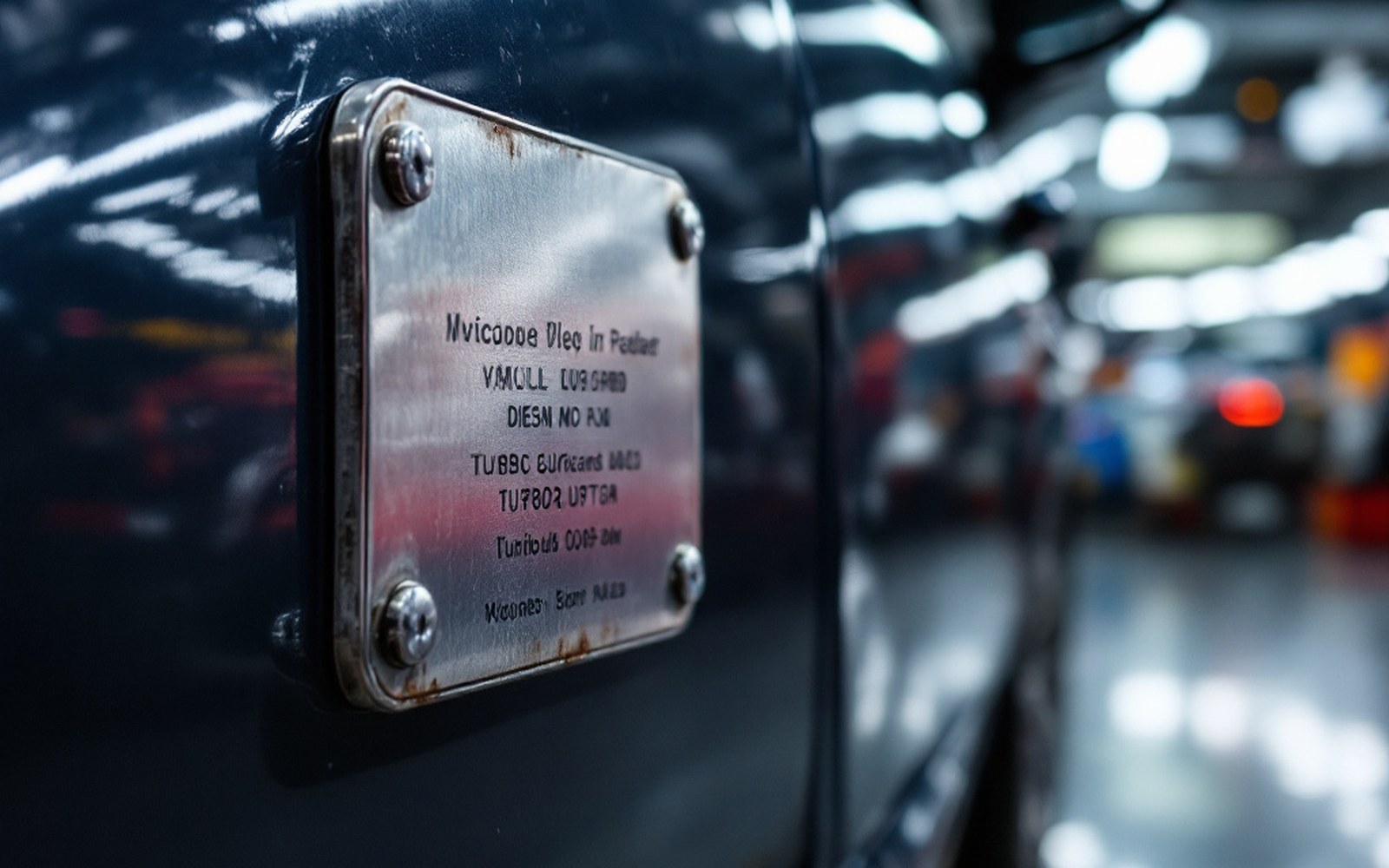
The plate records who took responsibility for the whole vehicle, not who last worked on it.
What the plate actually says
Every vehicle sold new in a regulated market carries a VIN — a Vehicle Identification Number — stamped into the body and recorded on a certificate of conformity. That certificate ties the vehicle to a type approval: a formal finding by a national or supranational authority that the design as a whole meets the applicable standards for emissions, safety, noise and construction. In the European Union, that process runs under Regulation (EU) 2018/858 ↗, which brought light vehicles and their trailers into a single harmonised framework. In the United Kingdom, the equivalent post-Brexit scheme is administered by the Vehicle Certification Agency. In either case, what the type approval covers is the vehicle as specified — not the vehicle as you might choose to modify it.
The VIN encodes the World Manufacturer Identifier in its first three characters, then the vehicle descriptor, then a unique sequential production number. The manufacturer behind that WMI has certified, to the approving authority, that each vehicle built to that descriptor conforms to the tested specification. Change the specification and you change the basis on which the vehicle was approved. Whether that matters, and how much, depends entirely on what was changed and by whom.
Some tuning houses hold type approval and issue their own vehicle identification, which puts them in a different legal category from an aftermarket fitter.
An aftermarket workshop that fits a turbocharger, resets suspension geometry, swaps brake discs and installs a body kit has altered the vehicle. It has not altered the approval, because it cannot — it does not hold one. The car still carries the original VIN and the original certificate. The gap between what that certificate says and what the car now is becomes the liability that sits in the chain between the modifier, the owner and, ultimately, any insurer or court that has to decide whether the vehicle was fit to be on a public road. That gap is the entire subject of the warranty question, and it is why the distinction between an approved modification and an unapproved one is not legalistic pedantry but a genuine engineering and contractual boundary.
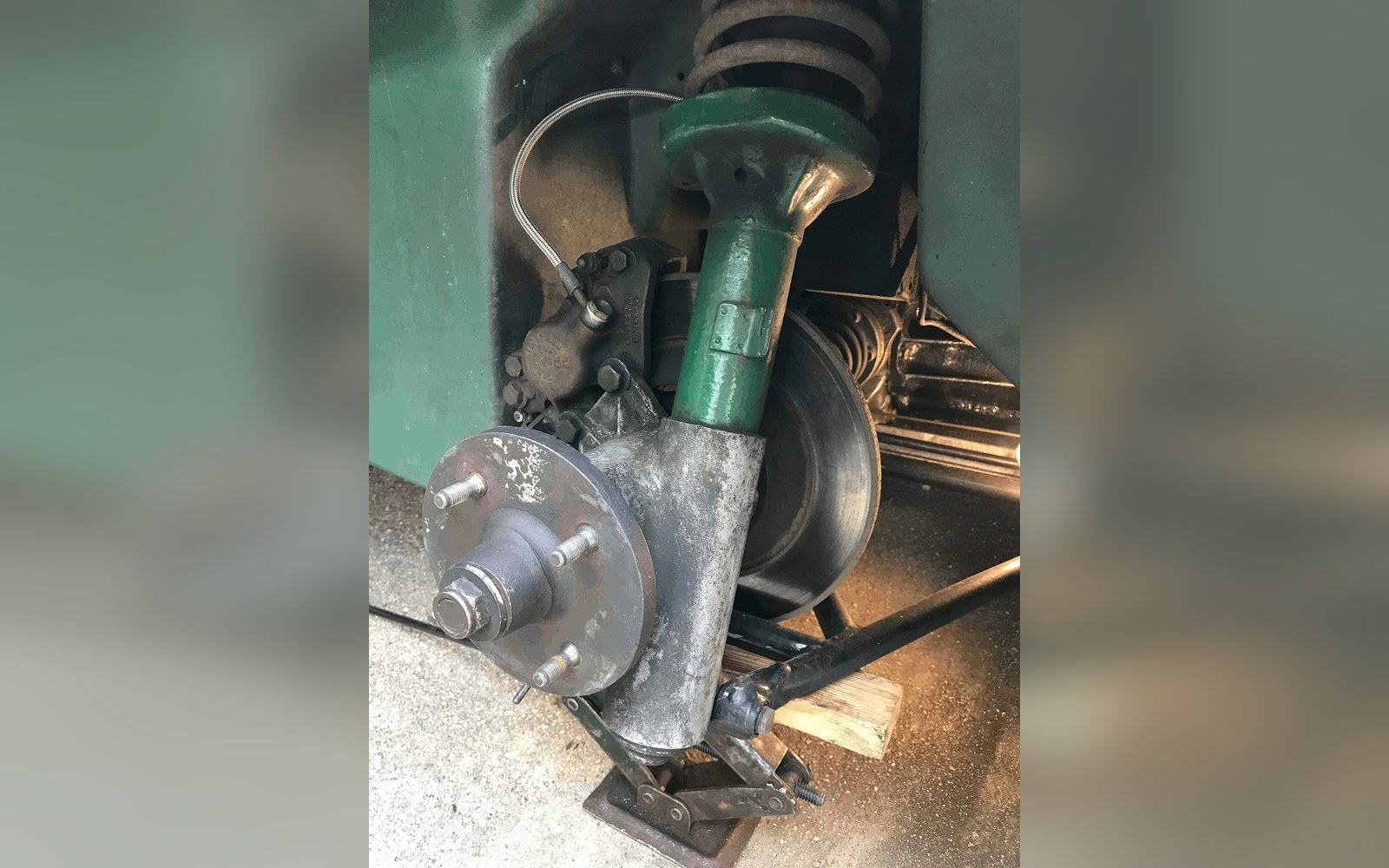
One corner with the wheel off. Every change here is paid for in compliance.
Photo: Lotus Elan Rear Suspension Hub · Wikimedia Commons
When a tuner becomes a manufacturer
A small number of tuning operations have closed that gap by doing what the regulation demands: they have obtained their own type approval. Alpina Burkard Bovensiepen GmbH, based in Buchloe, Bavaria, held its own vehicle approval as a small-series manufacturer for decades, issuing Alpina-branded vehicles that were legally distinct from the BMW base cars they were built on. Each Alpina carried its own VIN prefix, its own certificate of conformity and its own approval dossier — a document that covers not just the engine tune but the whole vehicle as modified, including braking performance, emissions compliance, axle loads and passive safety characteristics. BMW agreed to acquire the Alpina brand rights in 2022, and the transition to BMW's own type approval framework followed from 2025, but the engineering heritage of those decades of independent approval represents what the process actually demands: the modified car is re-homologated, not merely changed.
The threshold for this route is demanding. A small-series manufacturer in the EU framework may produce no more than a prescribed number of vehicles per year per type, and the testing burden, while somewhat lighter than that of a full-volume OEM, still requires demonstrating compliance across the full test matrix — crash structures, pedestrian impact, braking, emissions and noise among them. The cost is not measured in workshop hours. It is measured in the engineering staff and test infrastructure required to generate the data the authority will accept. Most tuning houses do not have that infrastructure. Most do not need it, because most of what they do falls into modification categories that do not require a new approval — individual component approvals, national small-series exemptions and so-called Individual Vehicle Approval routes exist precisely to handle the middle ground. But those routes carry their own conditions and limits, and none of them produces a new VIN.
Who does what
- Alpina (Buchloe, Bavaria)held independent small-series manufacturer type approval for decades; issued its own VIN prefix and certificates of conformity; brand rights acquired by BMW (agreed 2022, effective 2025); moving into BMW's type approval framework
- Brabus (Bottrop)holds type approval for selected high-specification vehicles, particularly for export markets requiring individual vehicle approval before registration
- AC Schnitzerworks at component level; aerodynamic and suspension parts carry TÜV certificates (German technical inspection authority) that cover the modification, not a re-homologated vehicle
- Nismoworks within Nissan's own manufacturer approval; Nismo-spec volume cars approved under the parent OEM framework
Brabus, based in Bottrop, also holds type approval for some of its vehicles — particularly the high-displacement AMG-based builds it exports to markets where individual approval is mandatory before registration. AC Schnitzer ↗ produces approved aerodynamic and suspension components that carry TÜV certificates for use on public roads, which is a component-level route rather than a vehicle-level one: the car keeps its VIN, and the individual modifications are covered by their own separate technical approvals. Nismo, Nissan's performance arm, operates within Nissan's own approval framework for the vehicles it produces in volume, which is a different structure again — the parent manufacturer's approval extends to the Nismo derivative.
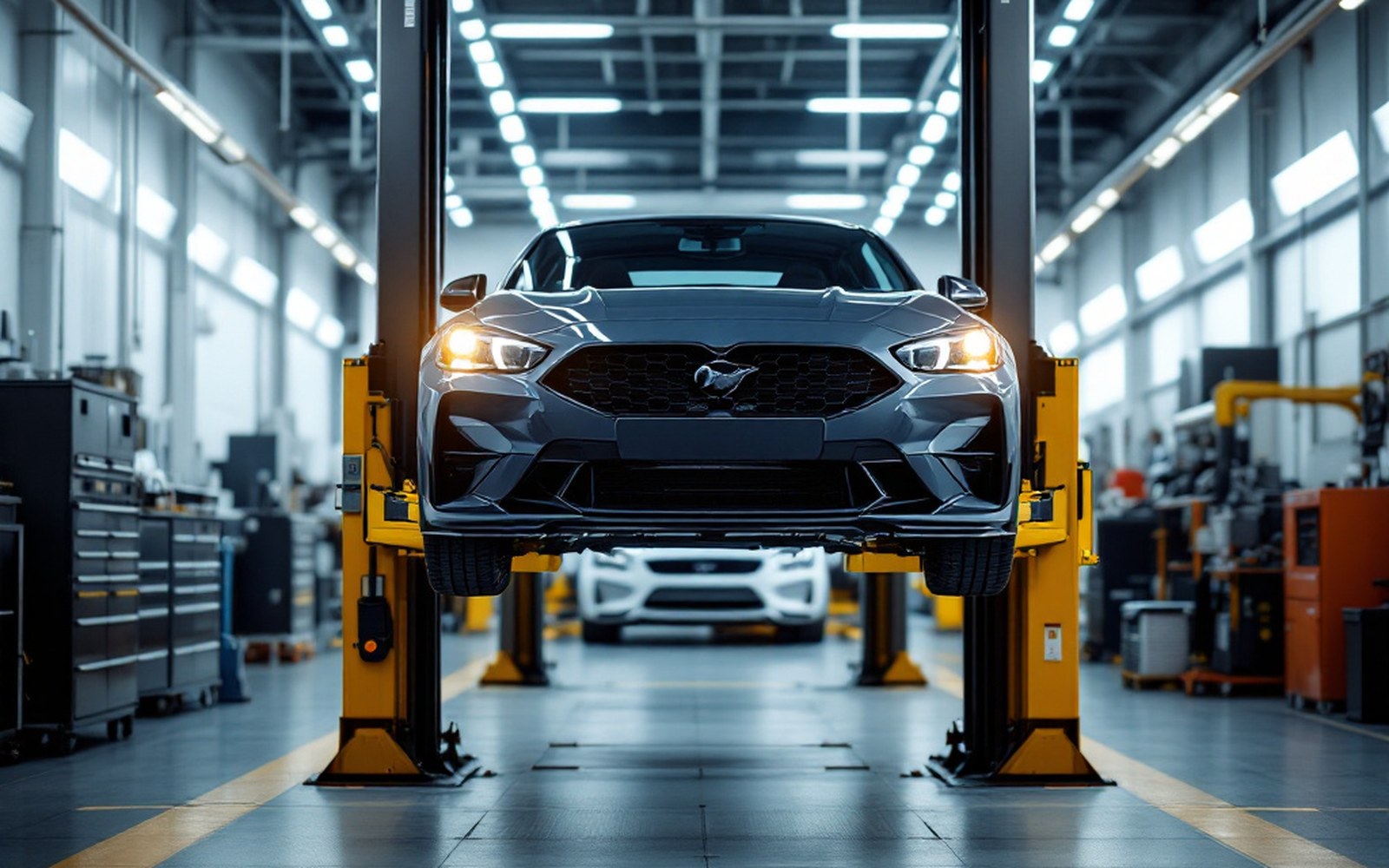
The underside is where the certification questions actually live. Most owners never see it.
What changes when the plate changes
The practical difference between a vehicle that carries a new type approval and one that does not is not aesthetic. It is about who answers for the whole when something fails.
When an approved manufacturer issues a certificate of conformity for a modified vehicle, it is asserting that the car — as it sits, with all its changes — meets the applicable standards as a complete system. If the car subsequently injures someone and the question of vehicle fitness arises, the certificate is what anchors the answer. The manufacturer who issued it carries the liability. That is precisely why the testing is expensive, why the insurance behind it is expensive, and why the process takes time measured in years rather than months.
The legal boundary
- VIN: encodes World Manufacturer Identifier (first 3 characters), vehicle descriptor, and unique sequential number
- Certificate of conformity: ties the vehicle to an approved specification; what changes when an approved tuner re-homologates
- Small-series manufacturer (EU): a prescribed annual production ceiling allowing a lighter but still substantive test matrix
- Individual Vehicle Approval: a national route for one-off or very low volume vehicles; does not produce a new VIN in the same way as full type approval
When an aftermarket fitter modifies a car without obtaining any approval, the original certificate remains, nominally, in place. But it covers the original specification, and any court or insurer examining the vehicle post-incident will want to know whether the modifications contributed to what happened. The type approval documentation is the first thing examined. If the brake discs are not those specified, if the springs are not those tested, if the wheel offsets are outside the homologated range, the gap becomes the argument.
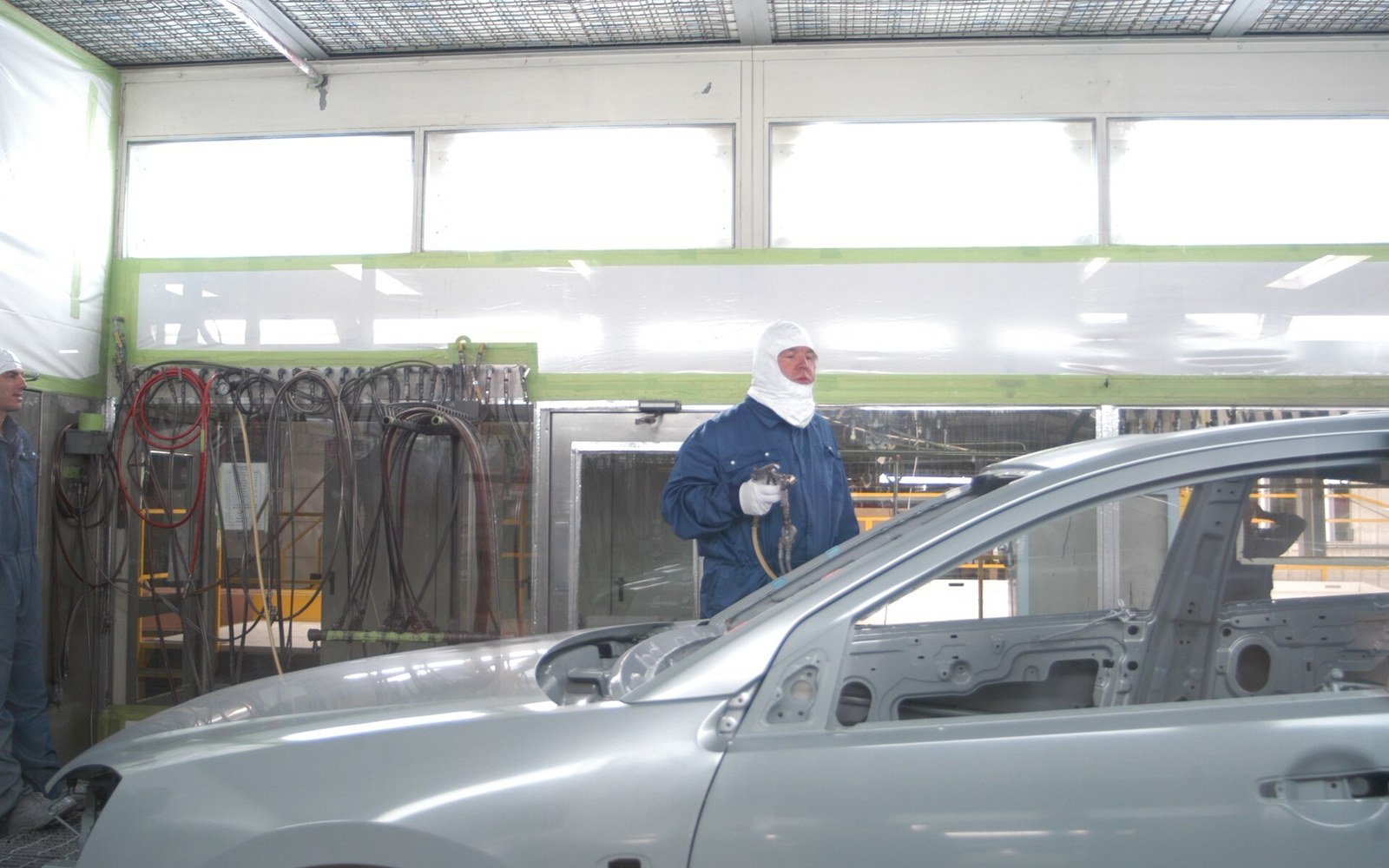
Preparation is the job. The gun is the last afternoon of it.
Photo: Spray booth · Wikimedia Commons
This is not a hypothetical concern. Suspension geometry affects braking performance. Forced induction changes the thermal load on engine mounts, drivetrain components and cooling circuits. Wider wheels alter axle loads and, through them, the tested braking distances that the original certificate used. None of these connections are exotic engineering — they are the reason type approval tests the vehicle as a whole rather than approving components in isolation and assuming they add up cleanly.
The plate, then, is not bureaucracy. It is the record of who took responsibility for the engineering of the complete vehicle. A VIN issued by a manufacturer who has done the approval work carries with it a chain of accountability. A VIN that predates a set of modifications, and has not been updated to reflect them, is a record of something the car no longer is. Understanding that distinction is more important than understanding any individual modification in isolation, because it is the frame inside which every other decision — the intercooler, the coilovers, the wider arch — acquires or fails to acquire legal standing.
Read next in A plate is the difference