Suspension is geometry before it is stiffness
Lower is not the same as better — change the ride height and you change every number the engineers put in the suspension, most of them for the worse.
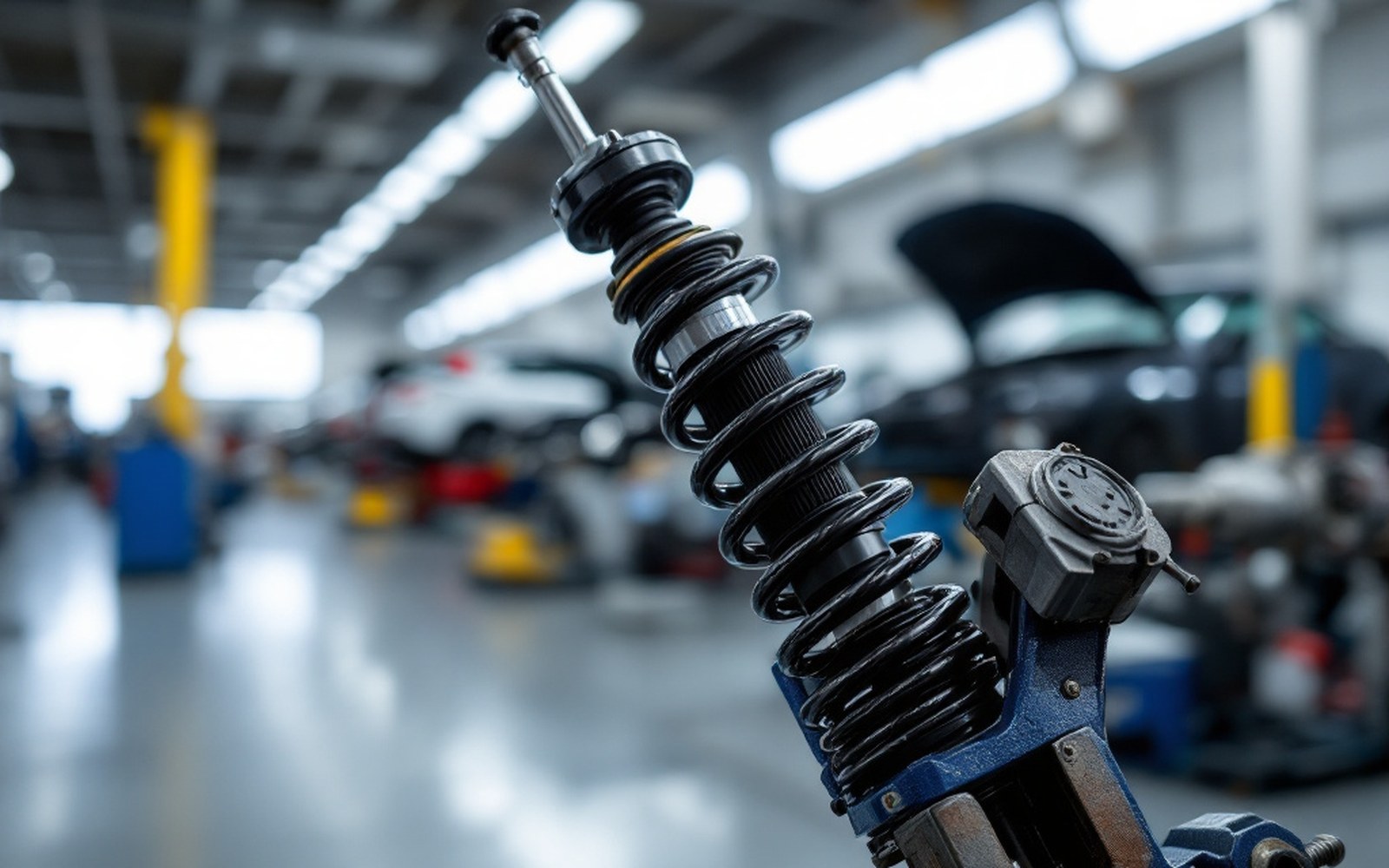
A coilover out of the car. Height is geometry before it is stiffness.
What height actually moves
A road car's suspension geometry is set at the factory around a specific ride height. Every pivot point, every wishbone angle, every knuckle position is chosen so that as the wheel travels up and down it follows a carefully designed arc — one that keeps the tyre roughly upright, maintains a predictable roll centre, and delivers a camber curve that adds a little negative camber in cornering. Lower the body by thirty or forty millimetres and that arc does not change. The suspension still travels the same path relative to the chassis. What changes is where on that arc the wheel now sits at rest, and that shifts every downstream number.
Lowering a car changes roll centres and camber curves, and most road cars give up compliance rather than gain grip.
The roll centre is the geometric point about which the body rolls in cornering, derived from the intersection of imaginary lines drawn through the suspension linkages. On a MacPherson strut front axle ↗ — the dominant layout on road cars — that centre is already low, close to ground level. Drop the body and it can migrate below ground, producing a kinematic condition where cornering loads pull the body toward the road rather than restraining it. The result is not more grip; it is an unpredictable and sharply increasing roll rate that drivers experience as twitchiness at the limit.
Camber curves are equally sensitive. Most manufacturers tune their geometry so the outer wheel gains negative camber as it compresses into a corner, keeping the contact patch loaded. Start that compression from a lower static position and the wheel may already be at the point in its arc where further travel adds positive camber instead. The tyre leans away from the corner just as the load peaks.
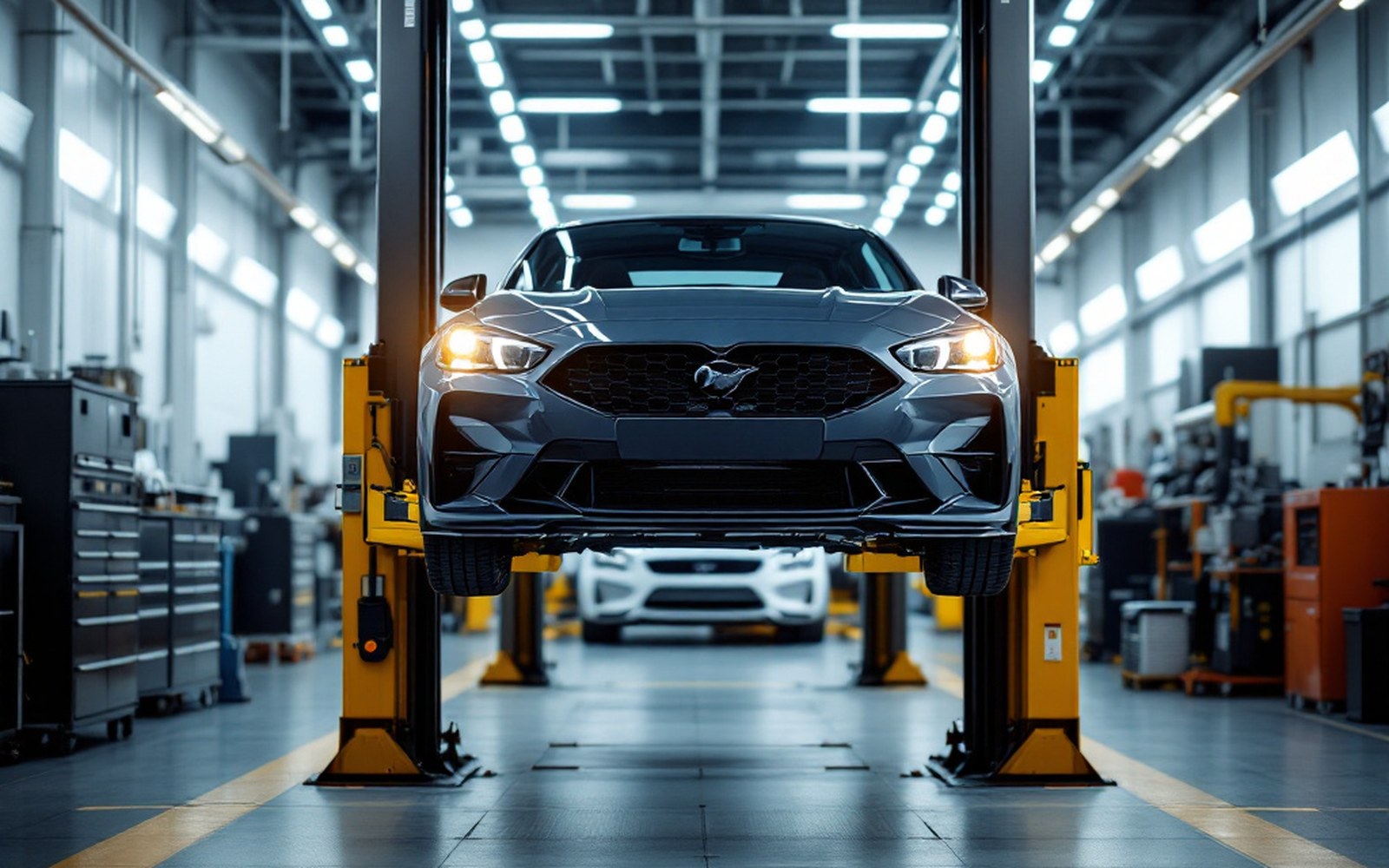
The underside is where the certification questions actually live. Most owners never see it.
Where the stiffness bill lands
The obvious fix — and the one most budget suspension kits apply — is to stiffen the spring so the wheel travels less. Less travel means less camber excursion, less roll centre migration and, superficially, a more composed car. What it also means is that every bump, joint and ridge in the road transmits more directly into the body. Compliance that was absorbing road noise is gone. Unsprung mass — the combined weight of wheel, tyre, hub, brake assembly and the unrestrained portion of the spring — has not changed, but the spring is now fighting it rather than guiding it. The tyre's ability to follow the road surface between bumps, which is what actually generates grip, degrades.
The geometry in numbers
- Roll centre — the geometric point about which a car body rolls; on most strut-front road cars it sits close to ground level and can migrate below it when the car is lowered
- Camber curve — the change in wheel angle relative to vertical as suspension travels; the factory tunes this to add negative camber under load; lowering can invert this effect mid-travel
- Unsprung mass — wheel, tyre, hub, brake assembly and the unrestrained spring mass; it does not change with a spring swap, but its relationship to the spring rate does
This is why the serious tuning houses work differently. Alpina ↗, which holds its own type approval and issues vehicles as a manufacturer rather than a modifier, recalibrates suspension geometry as a complete system when it revises ride height. Spring rates, damper valving, pivot geometry and ride height are developed together against a target — not chosen in sequence from a parts list. AC Schnitzer and Nismo take comparable approaches on their approved packages, specifying geometry corrections alongside their spring and damper changes because the alternative is a car that is lower in photographs and worse in use.
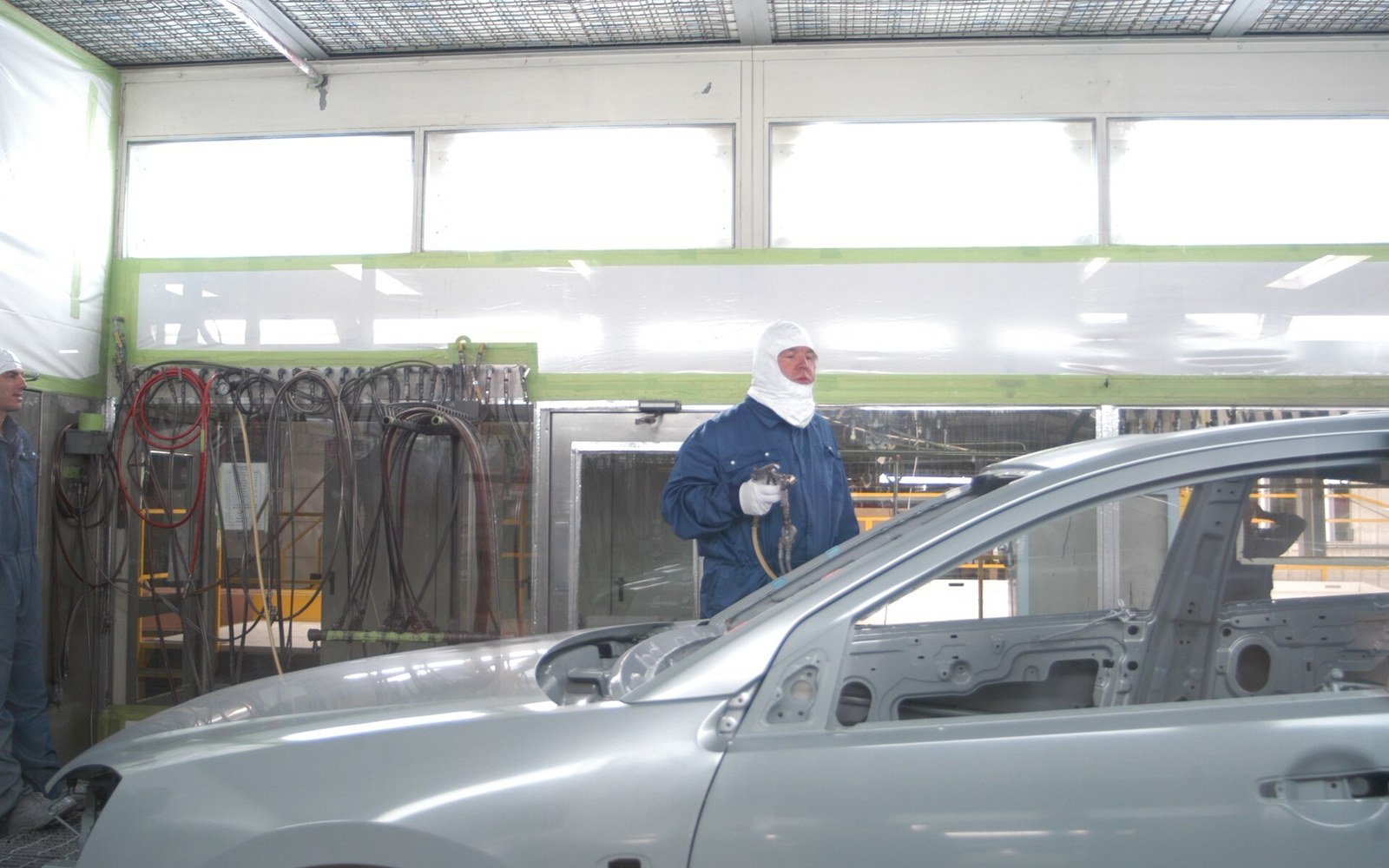
Preparation is the job. The gun is the last afternoon of it.
Photo: Spray booth · Wikimedia Commons
The damper's role
A spring sets a rate; a damper controls velocity. They are not interchangeable, but they are deeply interdependent, and changing one without respecifying the other is the single most common engineering error in aftermarket suspension work. A stiffer spring needs a damper tuned for higher frequency inputs; a standard damper on a stiffer spring often operates near the top of its designed velocity range on ordinary road surfaces, which means it is providing little useful control precisely when the road is rough enough to demand it. Damper tuning research ↗ consistently shows that the transition between underdamped and overdamped behaviour is steep — there is a narrow band where the system actually works as intended.
Brabus, in its more comprehensive suspension programmes, specifies damper characteristics as part of the geometry package. That integration is what separates a suspension change that improves a car from one that merely lowers it.
Who does it properly
- Alpina — BMW-related tuner holding independent type approval; revises geometry as a whole-vehicle system
- AC Schnitzer — specifies geometry corrections alongside spring and damper changes in approved packages
- Brabus — Mercedes-focused; integrates damper specification into suspension geometry programmes
- Nismo — Nissan's in-house performance arm; suspension development tied to type-approved packages
The engineering point is simple, even if the geometry is not: ride height is an input to a kinematic system, and that system was balanced at the factory. Move one input and every other output shifts with it. More often than not, without careful rebalancing, the car that comes off the lift is a harsher-riding vehicle that happens to look sharper parked — and a less capable one on the road where the geometry actually has to work.
Read next in What each change takes from somewhere else