Most of the money goes on the outside
The cosmetic work — body kit, wheels, paint — is where the biggest invoices live, and the engineering return on that spend is close to zero.
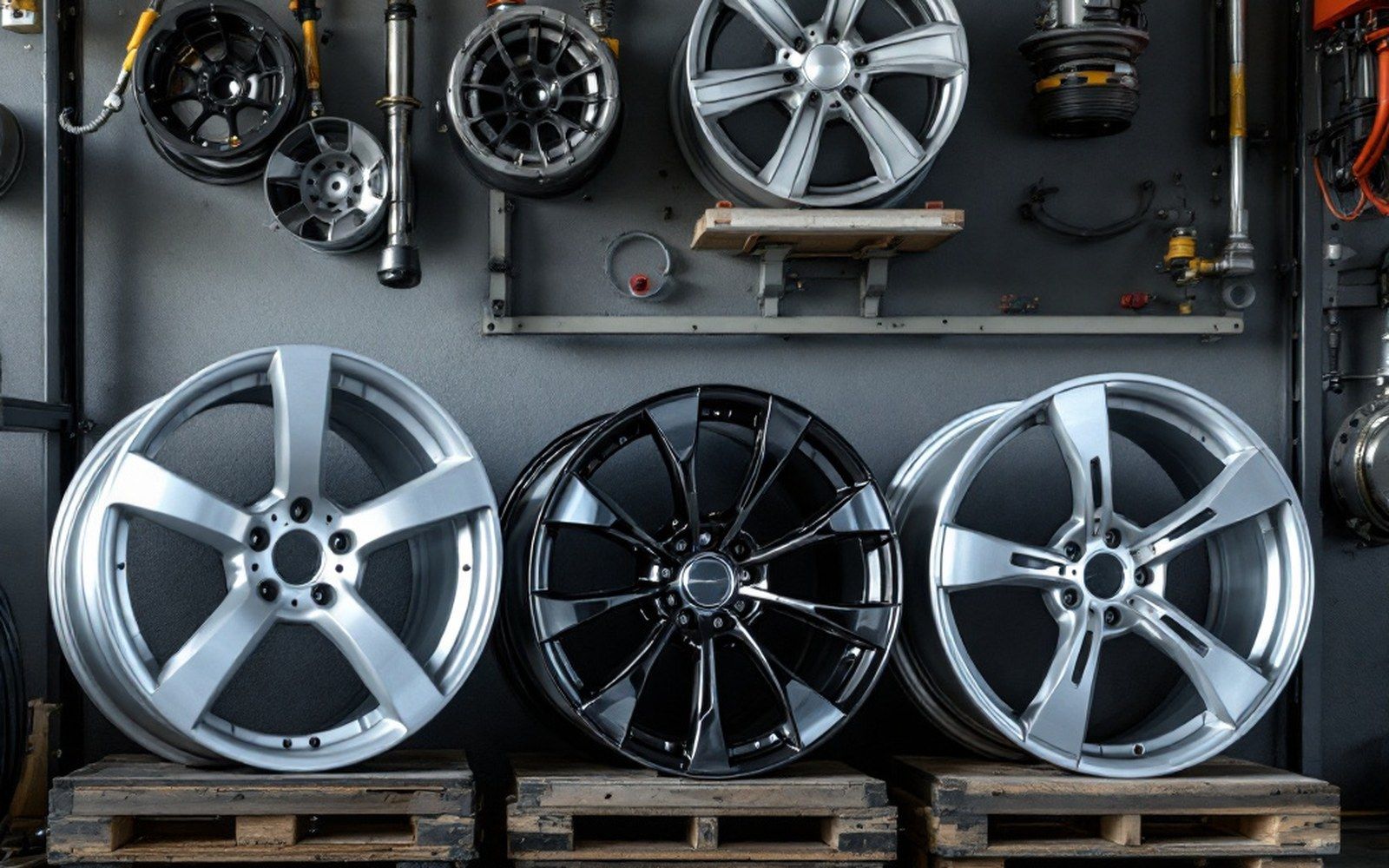
A wall of rims, none of which changes what the car does except by weighing something.
What the budget actually buys
Walk through any serious aftermarket build and ask where the money went. The honest answer, almost always, is the outside. A wide-body conversion with proper panel integration, four corners of bespoke forged alloys, and a full respray in a colour that took three weeks of booth time will account for a larger slice of the total invoice than the engine work, the suspension geometry, and the brake upgrade combined. This is not a complaint — it is arithmetic. Labour, material and the sheer number of craft hours required to make a car look right are expensive, and bodywork is unforgiving of shortcuts in a way that a software map never is.
The body-kit economy is essentially a labour economy. Fibreglass is cheap; skilled hands shaping it to gap-match factory panels are not. Dry carbon — the autoclave-cured structural-grade material used by firms like Brabus and Alpina ↗ on specific components — costs considerably more per kilogram than wet-laid fibreglass, and its value is almost entirely in weight reduction rather than in the visual result, because from ten feet the two are indistinguishable unless you are looking for the weave. Most road-car body kits use the cheaper process and make up the difference in finish, which loops back to the paint shop and its own economics.
Paint is the budget item people most reliably underestimate. A full bare-metal respray on a medium-sized saloon at a competent body shop involves stripping all trim and glass, flatting — that is, the successive cutting back of each primer and base-coat layer to remove imperfections before the next goes on — applying the colour in multiple coats, then lacquering and machine-polishing to a level of gloss that survives scrutiny. The flatting stages alone account for the bulk of the time, which is why refinishing is driven by schedule rather than material cost: a week or more can disappear into preparation before a drop of colour is applied.
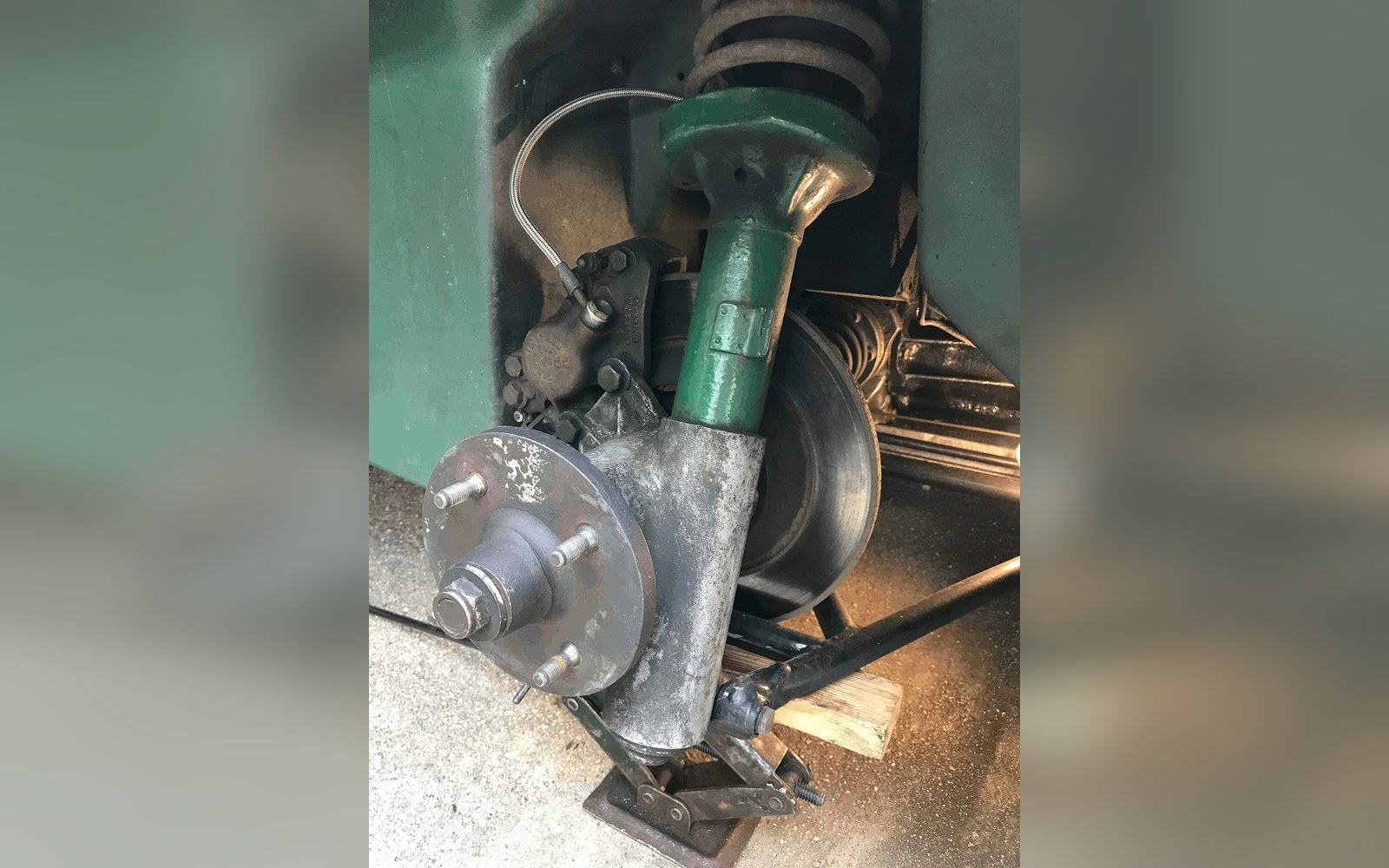
One corner with the wheel off. Every change here is paid for in compliance.
Photo: Lotus Elan Rear Suspension Hub · Wikimedia Commons
Where wheels fit in, and what they cost elsewhere
Wheels occupy an interesting position in the cosmetic hierarchy because they are the one item in this category that actually has mechanical consequences. A wider wheel on a wider tyre changes lateral grip and steering feel; a heavier wheel adds to unsprung and rotating mass in ways the car's dampers and inertia have to manage. The temptation is to treat wheel selection as purely visual — diameter, lip depth, finish — and ignore the weight penalty of going from a cast to a heavy forged piece, or the compliance penalty of stretching a low-profile tyre across a diameter the car was never calibrated for.
The engineering case here is almost always inverted relative to the aesthetic one. Forged aluminium alloys — the process some premium tuners use on their wheels, for instance — are lighter than equivalent cast pieces, and lighter is genuinely better for unsprung mass. But the forged wheels that look most dramatic on a wide-body car are often also the widest and the heaviest, because the large-diameter, multi-piece designs that photograph well use more material and carry more rotating weight than a sensible 18-inch single-piece would. A larger wheel usually costs ride and response even when the wheel itself is well-made, because tyre sidewall is what absorbs small-amplitude road inputs, and sidewall disappears as diameter grows.
What costs what
- Body-kit labour — skilled panel-fitting and gap-matching is the dominant cost, not the raw material
- Flatting — the repeated cutting-back of primer and base coats; drives respray schedules more than painting itself
- Forged vs cast wheels — forged is lighter per equivalent strength; but large-diameter forged multi-piece designs often end up heavier than modest cast alternatives
- Tunnel/CFD validation — what separates an aerodynamic claim from an aerodynamic result; rarely reflected in the visual finish
Nismo, Nissan's in-house performance arm, offers a useful case study in how a factory-backed tuner approaches this. Its wheel specifications for competition-derived road applications are developed around unsprung mass targets, not styling targets, and the visual result — often a relatively modest diameter by aftermarket convention — reflects that priority. The styling-first aftermarket works in the other direction.
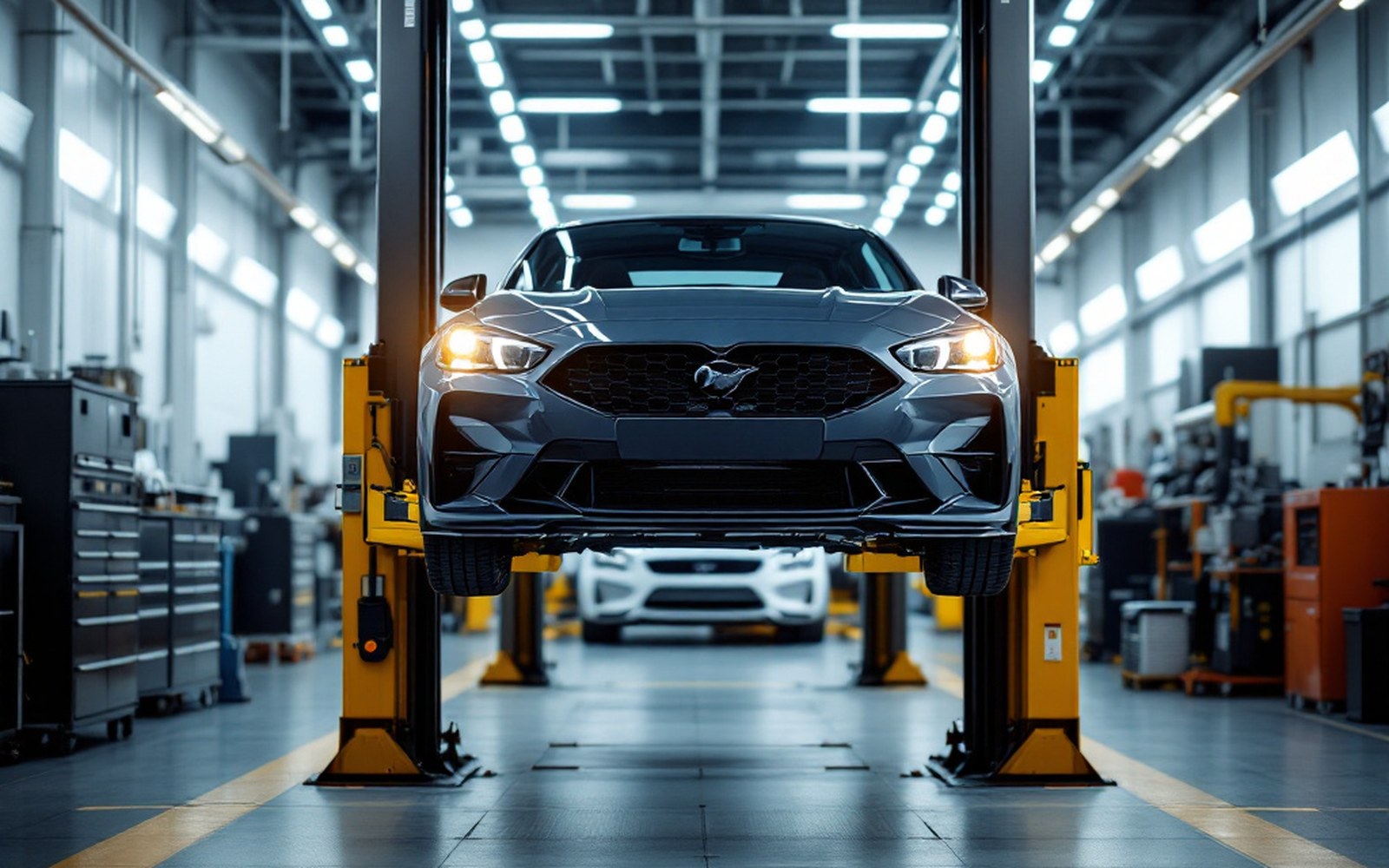
The underside is where the certification questions actually live. Most owners never see it.
Aero that isn't, and aero that is
Body kits are sold partly on aerodynamic grounds, and the claims deserve scrutiny. Most aftermarket body kits — front splitters, side skirts, rear diffusers — are shaped by eye rather than by tunnel or simulation. They may reduce front-end lift relative to the standard car, or they may not: without development data, neither the builder nor the buyer knows. Most add-on aero is styled rather than developed, and the distinction matters because bodywork that manages airflow poorly can destabilise the car at speed or add drag with no downforce return, which is the worst of both outcomes.
The tuners who take this seriously invest in computational fluid dynamics modelling at minimum, and wind-tunnel time at best. AC Schnitzer ↗ validates its aerodynamic packages on BMW platforms using this kind of development resource, and it shows in the way their components are integrated — not bolted over the standard bodywork but designed to work with the pressure distribution of the specific car. That work costs money that does not show in the finish; it shows in whether the piece does what it is claimed to do. The visual difference between a validated and an unvalidated splitter is roughly nothing.
The approval angle
- Type-approved body changes must meet pedestrian-impact and dimensional standards as part of whole-vehicle certification
- Brabus, Alpina, AC Schnitzer and Nismo each operate within or alongside manufacturer approval frameworks
- An unapproved change that exceeds the original type-approved envelope shifts liability from regulatory to contractual
Downforce itself is never free: it comes with a drag penalty that shows up in fuel consumption and in the engine load required to maintain speed. A wing that produces real downforce will cost real drag. One that produces neither is acting purely as a styling piece, which is a legitimate choice made honestly — the problem is when the invoice implies engineering that was never done.
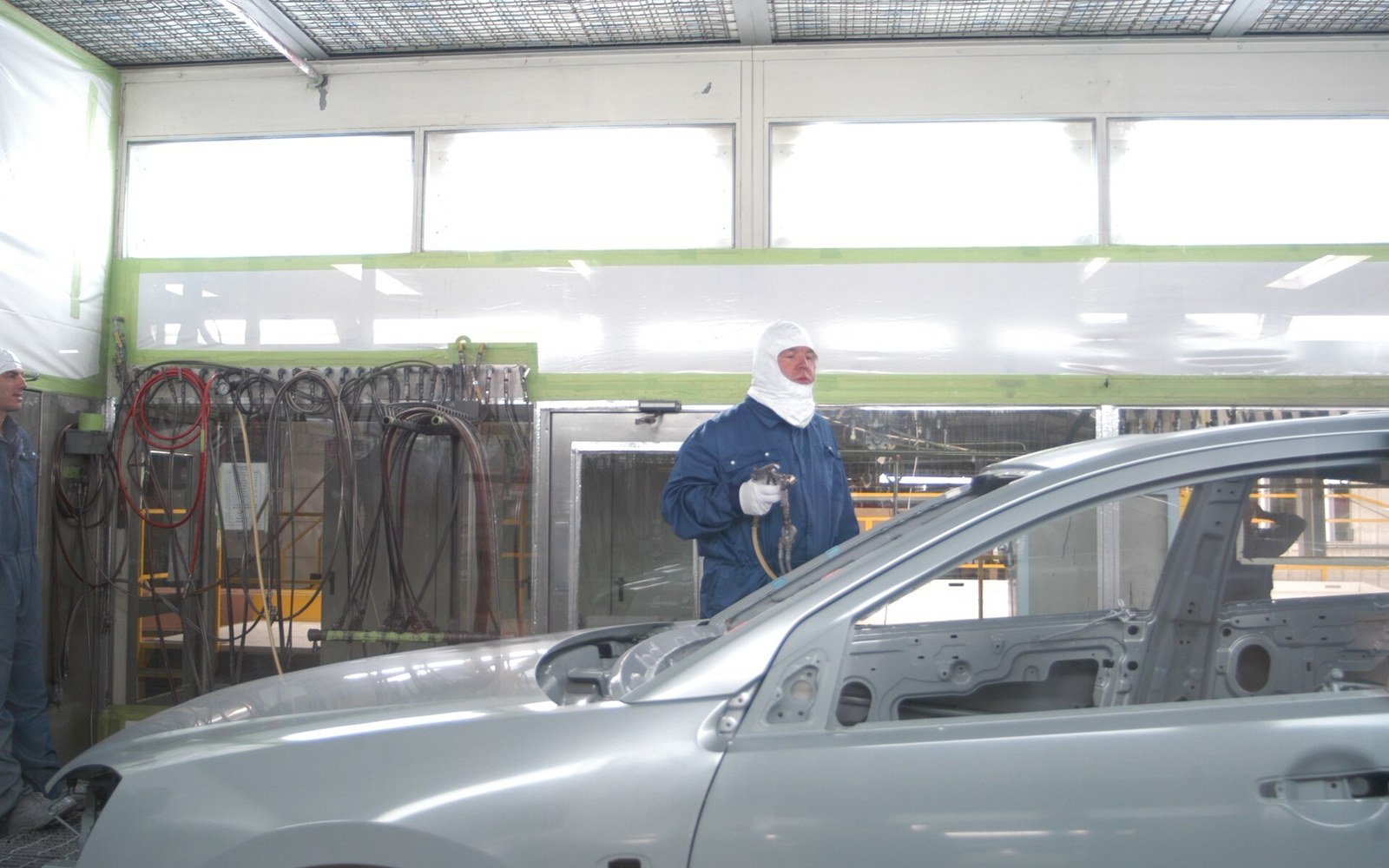
Preparation is the job. The gun is the last afternoon of it.
Photo: Spray booth · Wikimedia Commons
What the approved houses absorb that the rest do not
The tuners who operate as manufacturers — who hold type approval and issue their own vehicle identification numbers — carry costs that are invisible to the buyer because they are baked into the process rather than itemised on a quote. Brabus, which holds type approval and re-plates vehicles as Brabus models rather than Mercedes derivatives, has to certify its bodywork changes as part of the whole-vehicle approval, including pedestrian-impact geometry in markets where that is mandated. AC Schnitzer and Alpina have navigated versions of this for their respective BMW-based products. Nismo's road-car programme operates within Nissan's own approval infrastructure. What this means for the cosmetic work specifically is that a certified wide-body cannot simply be wider — it has to be demonstrably safe at the new dimensions, with documentation to prove it.
For a customer, the downstream consequence is simple: an approved conversion retains a clear regulatory identity, which matters for insurance, for resale, and for any subsequent inspection. An unapproved body kit that takes the car outside its original type-approved envelope sits in a different category entirely — one where liability questions become contractual rather than regulatory, and where the answer is rarely comfortable. The cosmetic investment is the same either way. What differs is what it buys beyond the appearance.
Read next in Most of the money goes on the outside