Forced induction is a heat problem
Boost moves air; heat decides how much of it you can use.
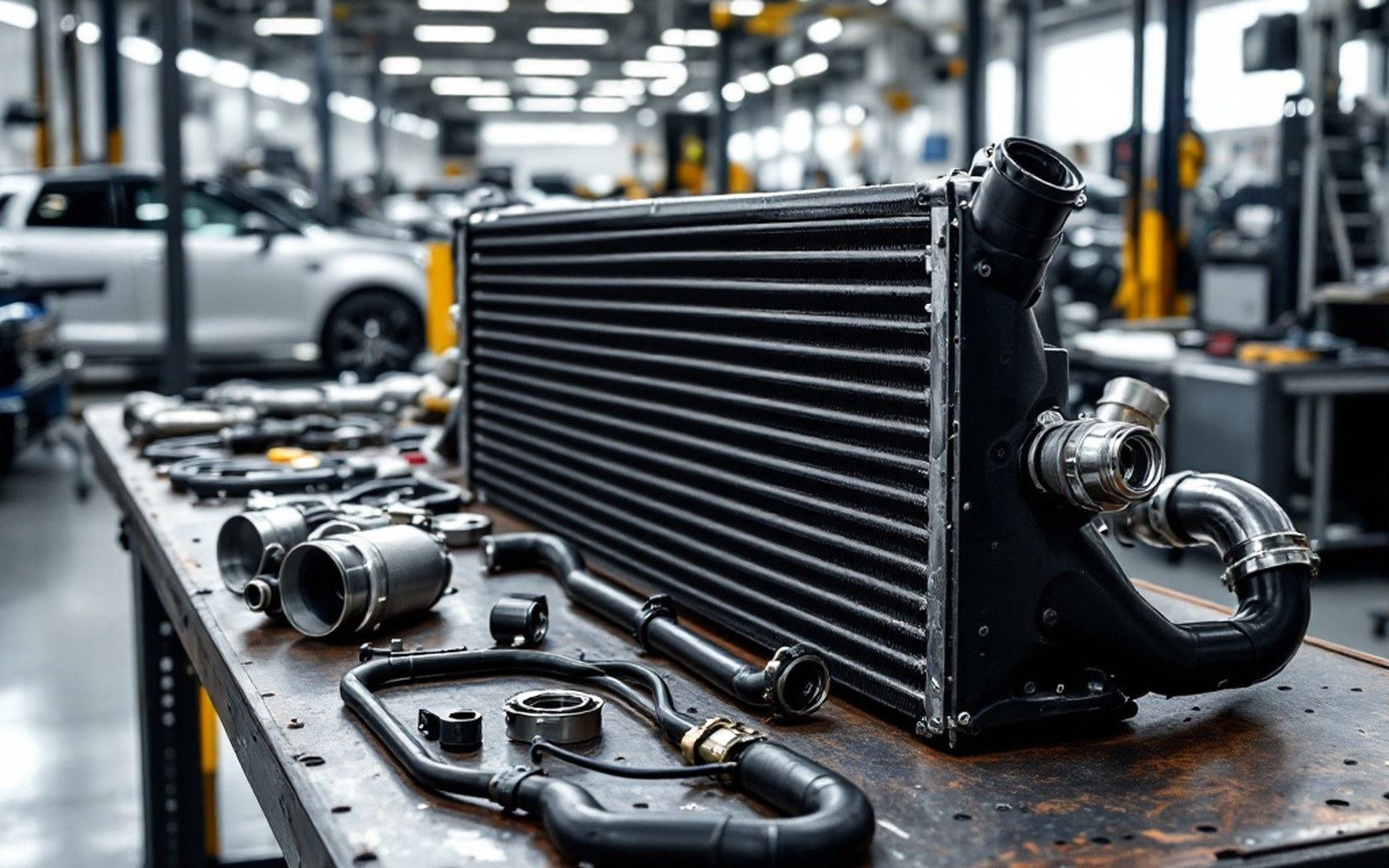
Cooler and pipework. Boost is a heat problem wearing a power figure.
The compressor is the easy part
A turbocharger or supercharger does one thing: it pushes more air into the cylinder than atmospheric pressure alone would deliver, allowing proportionally more fuel to follow it and more energy to be released per combustion event. The compressor wheel, the turbine housing, the intercooler plumbing — these are the visible hardware, and they are also the least constrained part of the system. Sizing a compressor to a given engine is a tractable engineering problem. Managing what that compressor does to the air is where the real work begins.
When you compress a gas, you heat it. This is not a side-effect; it is thermodynamics. The temperature rise across a centrifugal compressor is proportional to the pressure ratio and inversely proportional to the compressor's isentropic efficiency — which in the real world means that air leaving even a well-designed turbocharger compressor at a meaningful boost pressure can be considerably hotter than ambient. Hot air is less dense than cool air, so the mass of oxygen arriving at each cylinder — the quantity that actually matters — is lower than the pressure reading implies. The intercooler's job is to recover that density loss by extracting heat before the charge reaches the intake valves. Charge cooling, as it is properly called, is therefore not a power-adder; it is the mechanism that makes the boost pressure you have already generated usable.
The distinction matters because it explains why a bigger intercooler is not always a straightforward upgrade. A larger core increases the heat-exchange surface area and residence time, but it also increases the volume of pressurised air that must fill before any of it reaches the engine. That volume is called the charge volume, and it represents lag — the moment between the driver's demand and the engine's response. Every intercooler is a compromise between thermal efficiency and transient response, and the correct balance depends on how the car is used. An engine calibrated for track use, where throttle is held open for long periods, tolerates a lazier intercooler response more readily than one in a road car encountering repeated short acceleration bursts. This is one reason factory intercoolers on production turbocharged cars are sized conservatively: the calibration team must validate the cooling system across a broad range of ambient temperatures and drive cycles, not a single optimised condition.
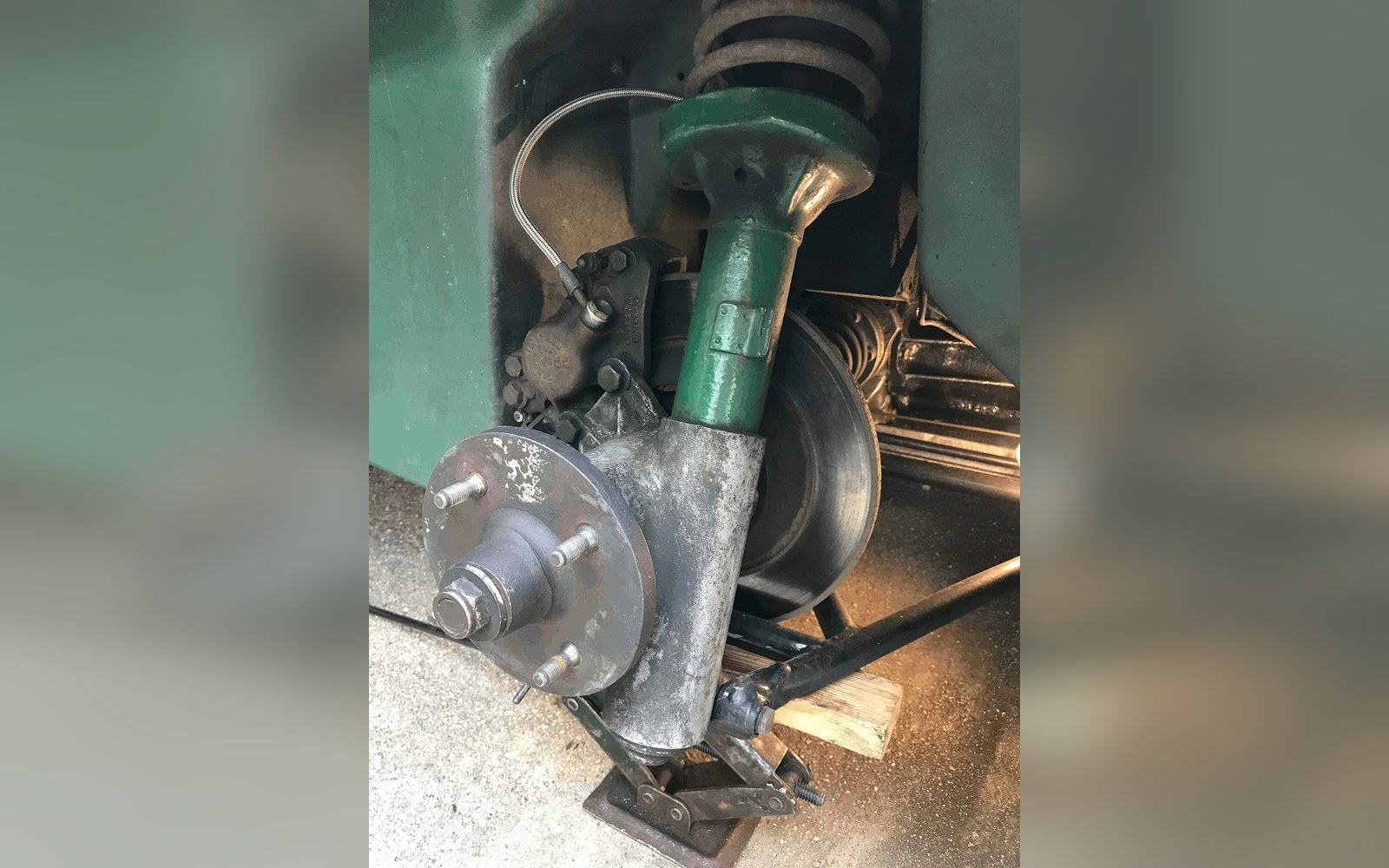
One corner with the wheel off. Every change here is paid for in compliance.
Photo: Lotus Elan Rear Suspension Hub · Wikimedia Commons
Knock margin: the number that really limits boost
The hard ceiling on usable boost is not the compressor map or the wastegate spring — it is knock margin. Knock, or detonation, occurs when the air-fuel charge in the cylinder auto-ignites from heat and pressure after the spark event, ahead of the advancing flame front, sending a pressure wave that the piston and connecting rod were not designed to absorb. Modern engines manage this with knock sensors feeding a closed-loop control system that retards ignition timing when knock is detected, backing the combustion event away from the detonation boundary. The margin between the ignition timing at which peak torque is achieved and the timing at which knock occurs is the knock margin, and it is the variable that all boost decisions ultimately come back to.
The thermal chain — how heat travels through a forced-induction system
- Ambient air enters compressor — temperature rises with pressure ratio
- Intercooler extracts heat — recovering charge density, at the cost of charge volume (lag)
- Charge enters cylinder — knock margin set by residual charge temperature, fuel octane and ignition timing
- Combustion transfers heat to coolant and oil — downstream cooling system must absorb increased load
- Exhaust gas carries peak heat — turbine housing, manifold and catalyst must survive sustained elevated temperatures
Raise intake charge temperature — because the intercooler is heat-soaked, because ambient temperature is high, because the fuel's octane rating is lower than the calibration assumed — and the knock margin shrinks. The engine management system retards timing to compensate, and torque falls. This is why a car that performs well on a cool morning in northern Europe may behave noticeably differently on a hot afternoon in southern Spain: the hardware has not changed, but the thermal conditions have shifted the knock boundary. It is also why ethanol-blended fuels or high-octane premium grades unlock additional calibration headroom that boost pressure alone cannot provide. Octane rating and its relationship to knock resistance ↗ is a well-understood combustion chemistry problem, not a marketing concept.
Tuners who work at the level of Alpina, Brabus or Nismo — houses with genuine calibration infrastructure and dynamometer facilities — approach this ceiling methodically. The boost target is arrived at by mapping knock margin across the full range of operating temperatures, load points and fuel grades the vehicle is expected to encounter, then writing a calibration that stays inside that boundary with an engineering margin for the worst-case conditions. The result is a map that does not simply add boost at every operating point; it trades boost against timing advance to recover torque where the thermal environment allows it, and sacrifices neither when conditions tighten.
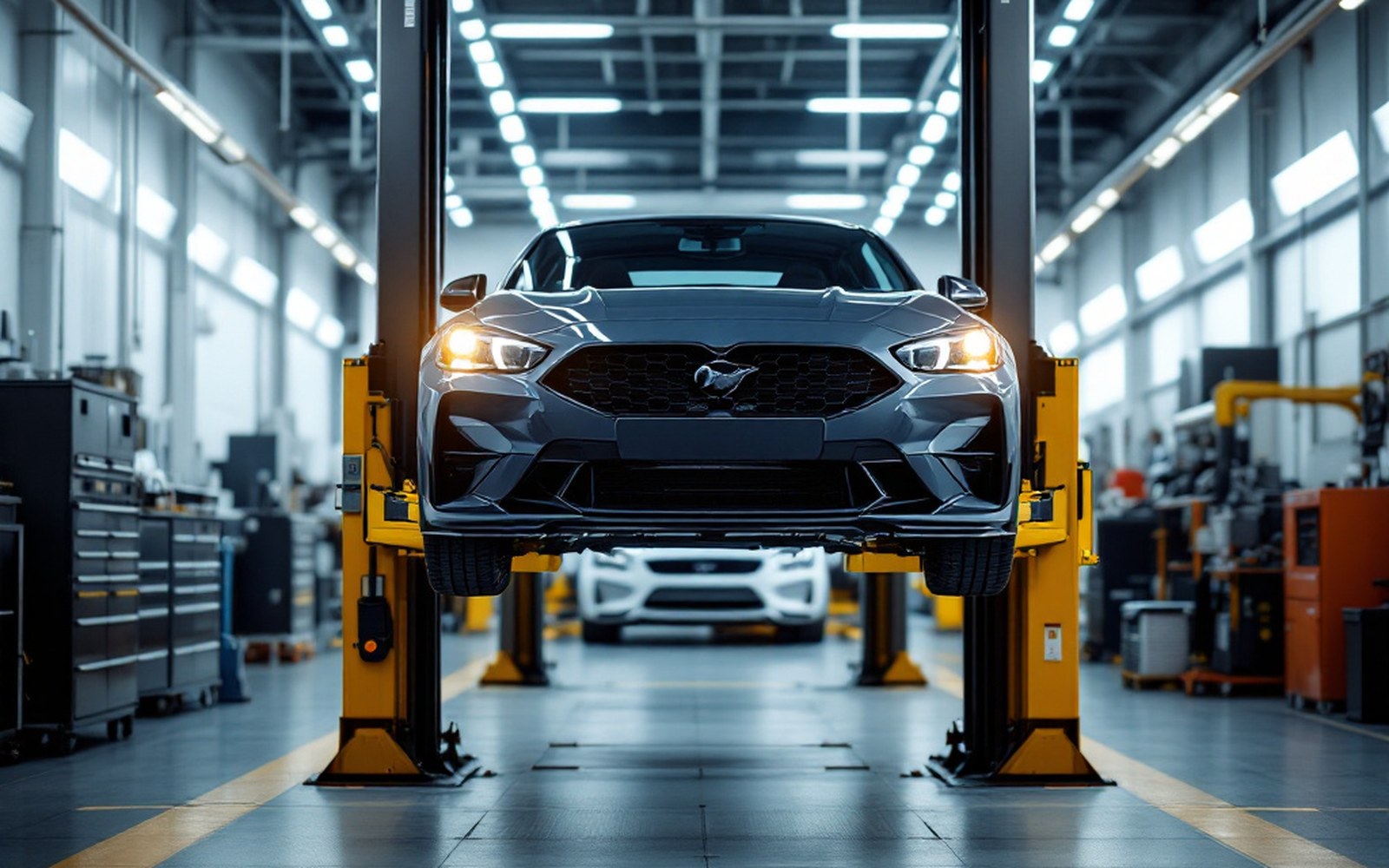
The underside is where the certification questions actually live. Most owners never see it.
What the rest of the drivetrain must absorb
Forced induction does not affect only the combustion chamber. The additional torque it produces is transmitted through components — clutch, gearbox, driveshafts, differentials — that were designed around a different load case. Manufacturers like Alpina, when building from a BMW base, typically reinforce or replace these components as part of the same engineering programme, because a drivetrain failure at elevated torque is not a calibration problem after the fact; it is the consequence of treating individual components as independent variables when they are part of a system. The European type-approval framework ↗ requires that a vehicle be assessed as a whole system, and this systemic thinking is exactly what distinguishes an approved, manufacturer-level build from an add-on kit.
Key trade-offs (not a glossary — these are the decisions)
- Intercooler size vs. throttle response — more core, more lag
- Boost pressure vs. knock margin — raise one, shrink the other unless charge temperature falls
- Peak output vs. durability — calibration margins that perform on a dyno may not survive a design life
- Fuel octane vs. ignition advance — higher octane widens the margin the calibration can exploit
There is also the cooling system to consider. Higher combustion temperatures mean more heat transferred to the coolant and oil. An intercooler upgrade that improves charge cooling but overloads the coolant-to-air heat exchanger downstream has not solved the problem; it has moved it. Similarly, a calibration that extracts more work from each combustion cycle increases exhaust gas temperatures, which the turbine housing, exhaust manifold and catalytic converter must survive over the vehicle's design life. AC Schnitzer, operating as it does within the German TÜV approval environment, validates not just peak output but the durability of components under sustained load — a design-life validation ↗ that a map flash or bolt-on kit is never subjected to.
The system, not the component
The practical lesson is unglamorous: forced induction done well is systems engineering, and the turbocharger or supercharger is the least interesting part of it. The questions that decide whether additional boost delivers durable, consistent performance are questions about heat — where it is generated, how quickly it can be removed, and what margin remains before the combustion chemistry becomes uncontrollable. Charge cooling capacity, knock margin, fuel quality, ambient conditions, drivetrain robustness and exhaust thermal management are all load-bearing elements of the same structure. Pull one without understanding its relationship to the others and the system will find a new failure point, on a dyno or on the road, in a week or in three years.
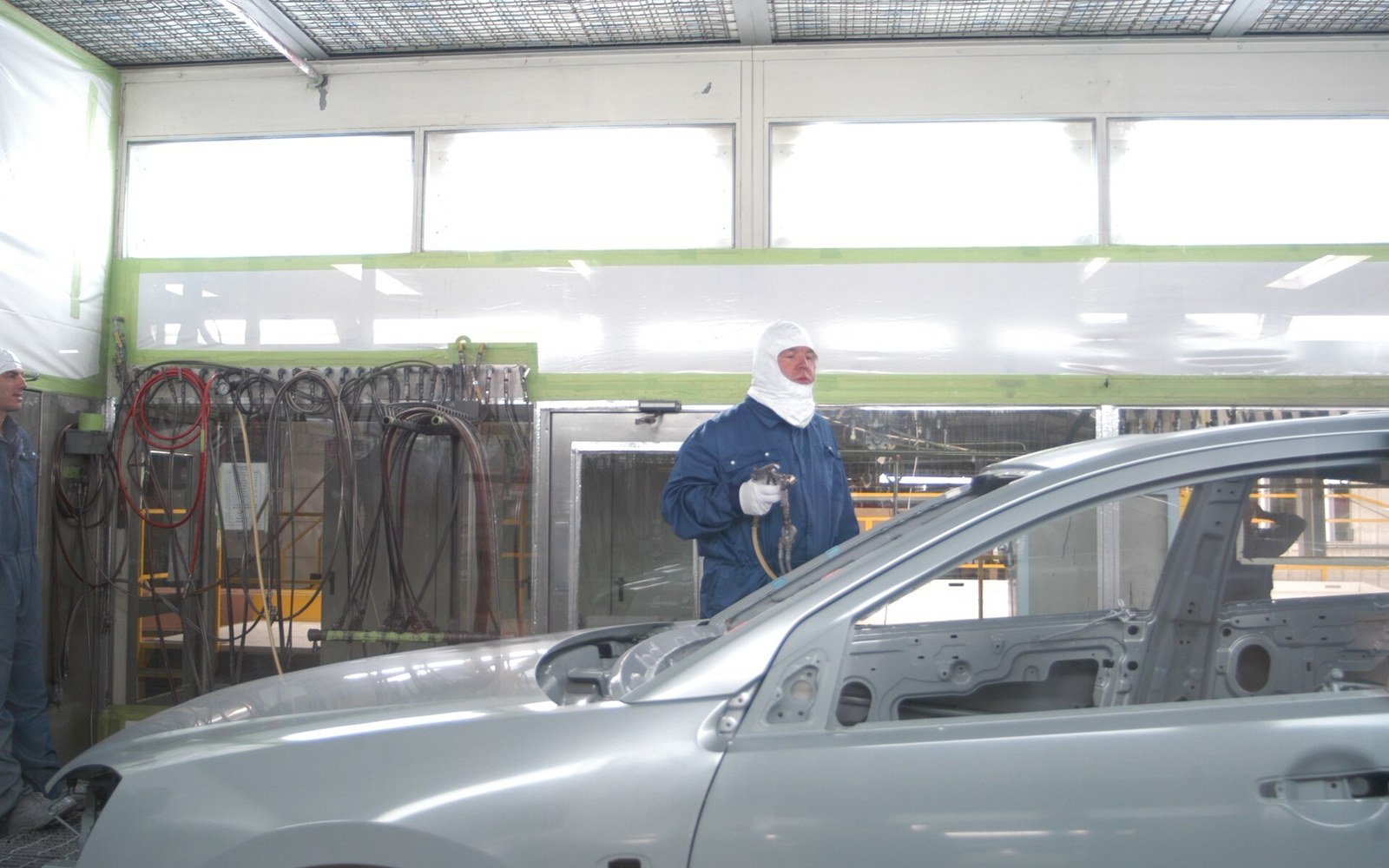
Preparation is the job. The gun is the last afternoon of it.
Photo: Spray booth · Wikimedia Commons
A tuner adding boost to a production engine is not extending what the factory built — they are replacing the factory's thermal management decisions with their own, and taking on the engineering liability that goes with that. The good ones treat it accordingly.
Read next in What each change takes from somewhere else