What each change takes from somewhere else
Every gain in one system is billed to another — in heat, in ride, in longevity, or in the calibration the car was built around.
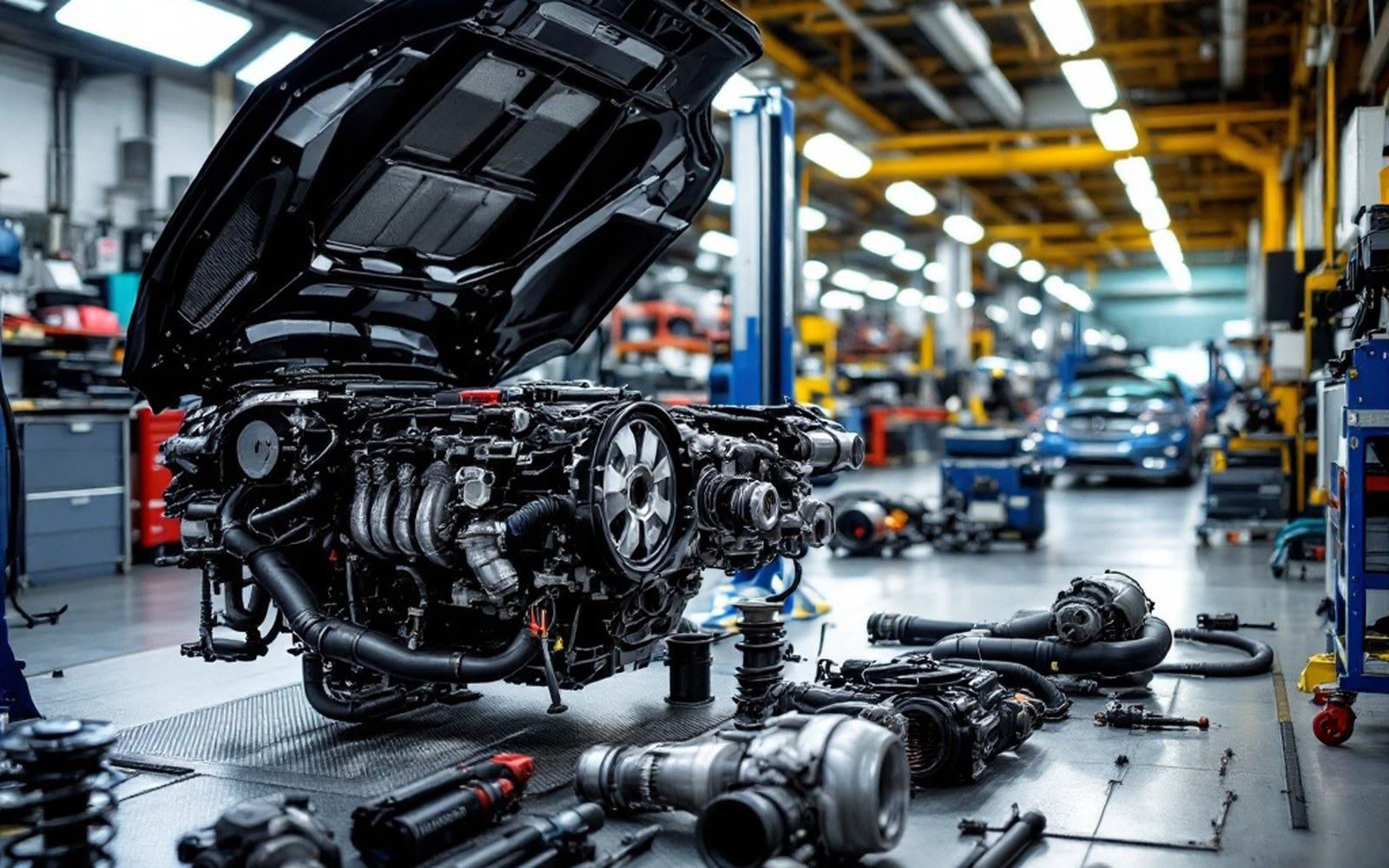
The intake laid out beside the bay: the visible half of a change that is mostly thermal.
The budget you cannot see
A production car is an engineered compromise. The engineers who certified it spent years tuning every system against every other, and what looks like conservatism — modest boost, soft springs, generous brake pad — is usually a settled ledger in which each line has been paid. When a tuner changes one line, the ledger does not disappear. It rebalances, silently, against whatever margin was left.
That is the fundamental trade that this guide is about. Not what a modification adds, but what it withdraws, and from where.
Every gain is paid for — in heat, in compliance, in durability, or in the fuel the map assumes.
Forced induction: you are buying heat on credit
A turbocharger or supercharger raises cylinder pressure, which raises combustion temperature, which raises the demand on every component downstream. The charge air itself arrives hotter — compressed gas heats by physics, not by neglect — and the engine's knock margin, the gap between normal combustion and destructive detonation, narrows in direct proportion. The ECU can defend that margin by retarding ignition timing, but retarded timing costs power and generates more exhaust heat. Chase the power back with more boost and the cycle tightens.
Charge cooling — an intercooler, a water-to-air core, methanol injection — buys back some of that margin by reducing intake air temperature before it enters the cylinder. But charge cooling adds volume and pressure drop to the intake path, which the turbocharger now has to work against. The compressor wheel is pushed further from its efficiency island; forced induction is ultimately a heat management problem before it is a power one, and every solution introduces a constraint somewhere else in the circuit.
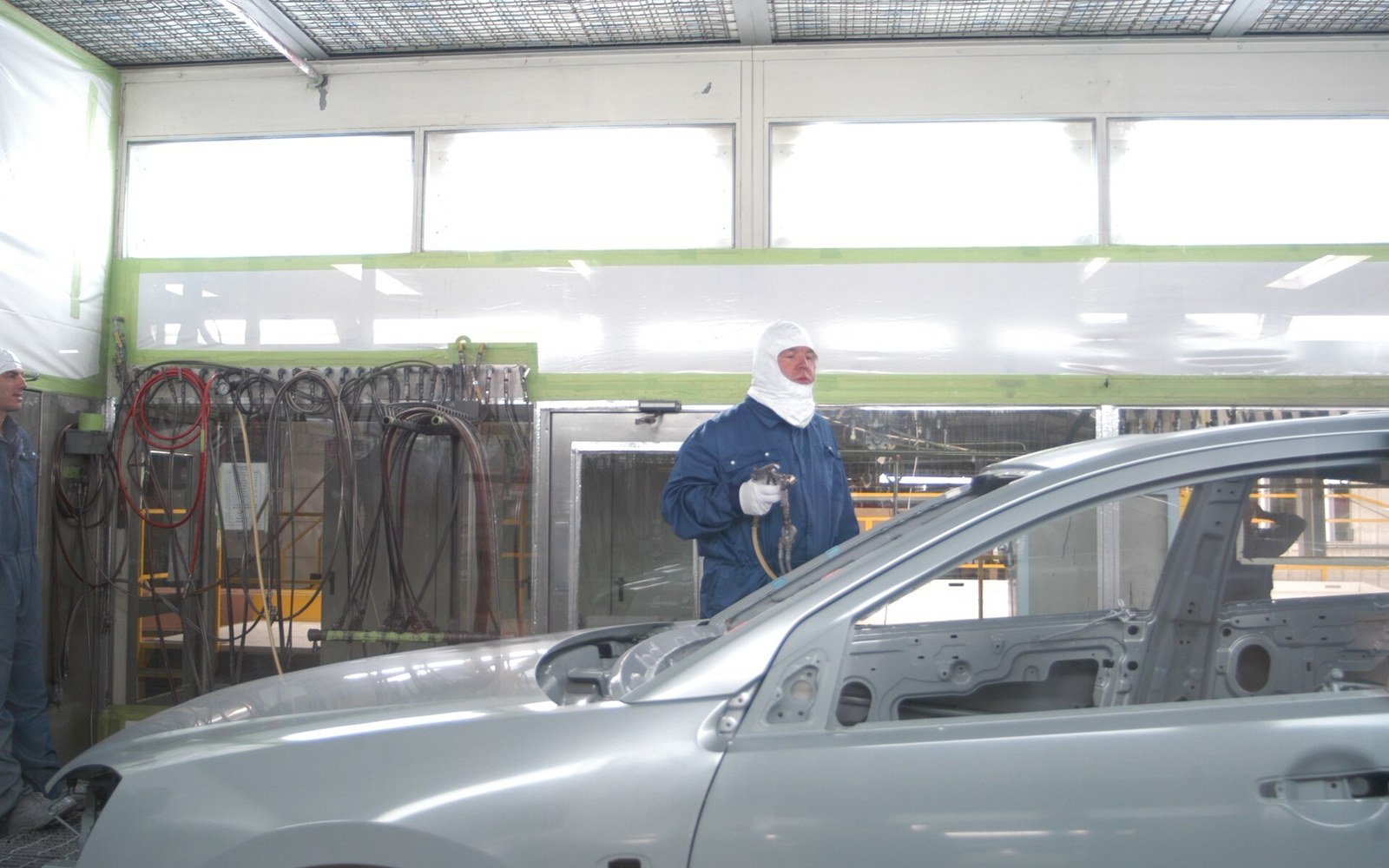
Preparation is the job. The gun is the last afternoon of it.
Photo: Spray booth · Wikimedia Commons
The fuelling map that the factory calibrated assumed a specific air density at the intake. Raise the boost, and the map is wrong. Remap it, and the fuel system — pump, injectors, return lines — must now supply a higher flow at a higher duty cycle than it was sized for. On a car engineered for exactly its original output, those components were not specced with overhead. The gain is real; so is the bill.
Suspension: geometry does not forgive shortcuts
Lowering a car is popularly understood as stiffening it. That framing misses the deeper change. When ride height drops, the suspension geometry the factory set at standard height no longer operates in the range it was designed for. Roll centres shift — often downward, increasing the lever arm through which body roll loads the outer tyre — and camber curves that tracked accurately through normal wheel travel now run out of range in compression. The tyre that looked parallel to the road at ride height is now cambered, reducing its contact patch under load.
Trade-offs at a glance
- Boost increase — narrows knock margin, raises exhaust heat, stresses fuelling components sized for original output
- Charge cooling — recovers intake temperature but adds intake restriction and pressure drop
- Lowering — shifts roll centres, alters camber curves, reduces compliance unless geometry is recalculated
- Heavier wheel — increases unsprung mass, demands higher spring rates, costs ride quality
- Larger brakes — raise thermal capacity and fade resistance, but require clearance that drives wheel size upward
- Rear wing — generates downforce only with drag; untested aero can raise lift rather than suppress it
- High-temperature brake pads — resist fade at speed, require warm-up before full friction is available from cold
Stiffer springs resist this camber change by limiting wheel travel, but resistance and compliance are a zero-sum trade. The wheel that cannot follow a road surface stays in less consistent contact with it. Unsprung mass — the wheel, tyre, hub, brake assembly and any unguided suspension component — is the variable a spring cannot fully control; a lighter wheel recovers faster after an impact, which is why a wheel's mass has engineering consequences that its finish does not. Add a heavier aftermarket rim and the spring rate required to manage it goes up, which takes more from ride quality to give back the response that was lost.
Suspension is geometry before it is stiffness, and altering one without recalculating the other spends compliance without buying handling.
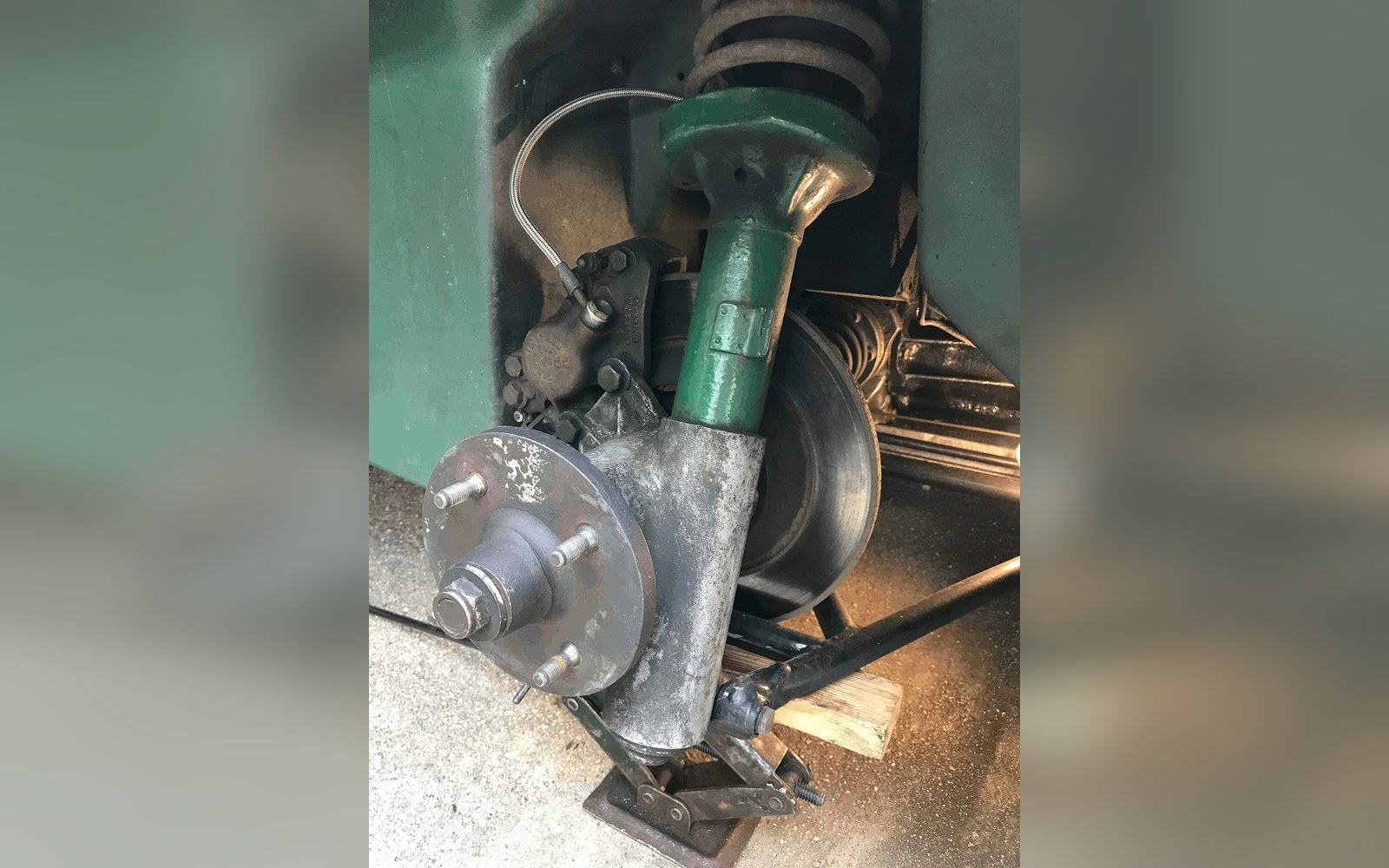
One corner with the wheel off. Every change here is paid for in compliance.
Photo: Lotus Elan Rear Suspension Hub · Wikimedia Commons
Brakes: capacity borrowed against temperature
A bigger brake is a brake with more thermal capacity. It absorbs the same kinetic energy per stop but distributes that energy across more mass, so rotor temperatures rise more slowly and brake fade — the point at which pad compounds lose friction coefficient as resin binders break down — arrives later in a sustained sequence of stops. That is the real gain: not more stopping force on the first application, but consistent stopping force on the fifth and tenth.
The cost arrives in packaging. A larger rotor requires a larger caliper, which requires a wheel with enough clearance to fit it. That wheel tends to be heavier and larger in diameter, which increases unsprung mass, which asks something of the suspension. Uprated pads developed for higher operating temperatures often need to be warmer before they generate full friction — they are slower to bed in from cold — which is a trade that circuit drivers accept and urban drivers notice. The material that resists fade on a mountain descent generates dust that costs rotors on daily commutes.
The certifiers
- Alpina — holds independent vehicle manufacturer status; modifications validated as a complete system
- Brabus — holds type approval for its Mercedes-Benz-based vehicles in multiple markets
- AC Schnitzer — BMW-based tuner with TÜV-certified component packages in European markets
- Nismo — Nissan's in-house performance division; approval coverage varies significantly by market and model
Bodywork and aero: downforce costs drag, and drag costs fuel
Aerodynamic add-ons reorganise the pressure field around the car. A rear wing that generates genuine downforce — load pressing the rear axle into the road — does so by deflecting airflow, and deflecting airflow creates drag. Drag is a force that the engine must overcome continuously at speed; the fuel map that governed the original car did not account for it. More drag at cruise means more throttle to hold the same speed, which means higher fuel consumption and higher exhaust temperatures at steady state.
Most add-on bodywork is not aerodynamically developed in any rigorous sense. As the guide on aero that works versus aero that is jewellery makes clear, a piece that produces neither downforce nor controlled drag is still changing the pressure field — often raising lift at the axle it sits above, because a surface that interrupts clean flow without redirecting it tends to accelerate air over itself and reduce pressure beneath. The consequence is a car that looks more purposeful while being, at speed, measurably less stable.
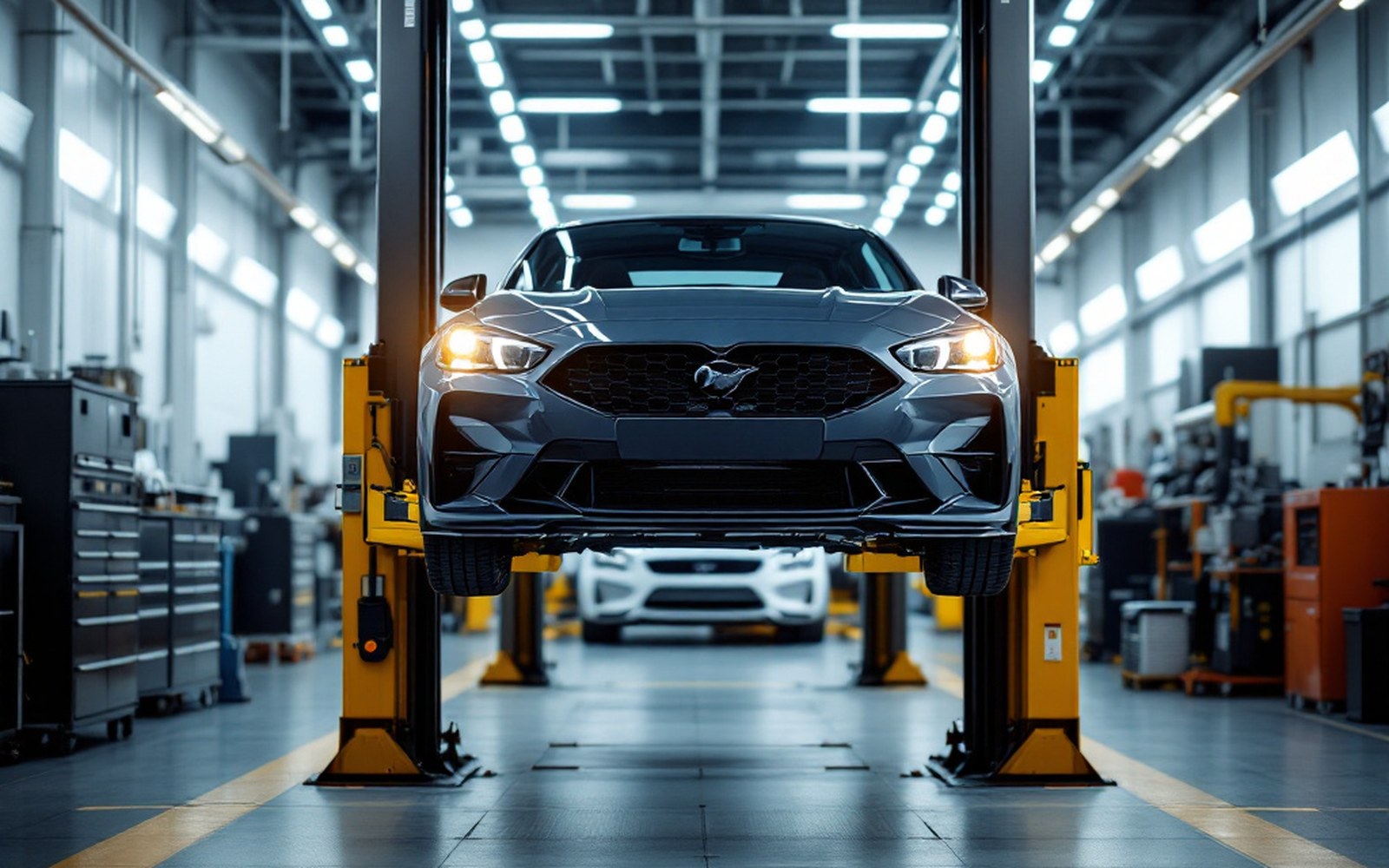
The underside is where the certification questions actually live. Most owners never see it.
What tuners such as Alpina, Brabus and AC Schnitzer actually certify
The houses that hold their own type approval — Alpina ↗ and Brabus among the best-documented examples, AC Schnitzer ↗ and Nismo at various certification levels depending on market — address these cross-system debts explicitly, because they must. An approval covering the vehicle as a whole requires demonstrating that what was taken from one system by a change to another has been accounted for. The ECU remap that supports a new turbocharger must be validated against the fuel system that now feeds it. The suspension package must be validated at the new ride height, not at the standard one. The brake specification must be assessed against the wheel package it fits inside.
This is what makes a certified tuner different from a modifier: not the ambition of the changes, but the evidence that the ledger was closed. Every gain paid for. Every withdrawal acknowledged. The car that comes out the other end is not the cheapest version of the modification — it is the version where someone checked the bill.
Read next in What each change takes from somewhere else