Two weeks in a booth for a colour nobody asked for
A respray takes time because paint requires time — chemistry can't be hurried, and that's before the bodywork starts.
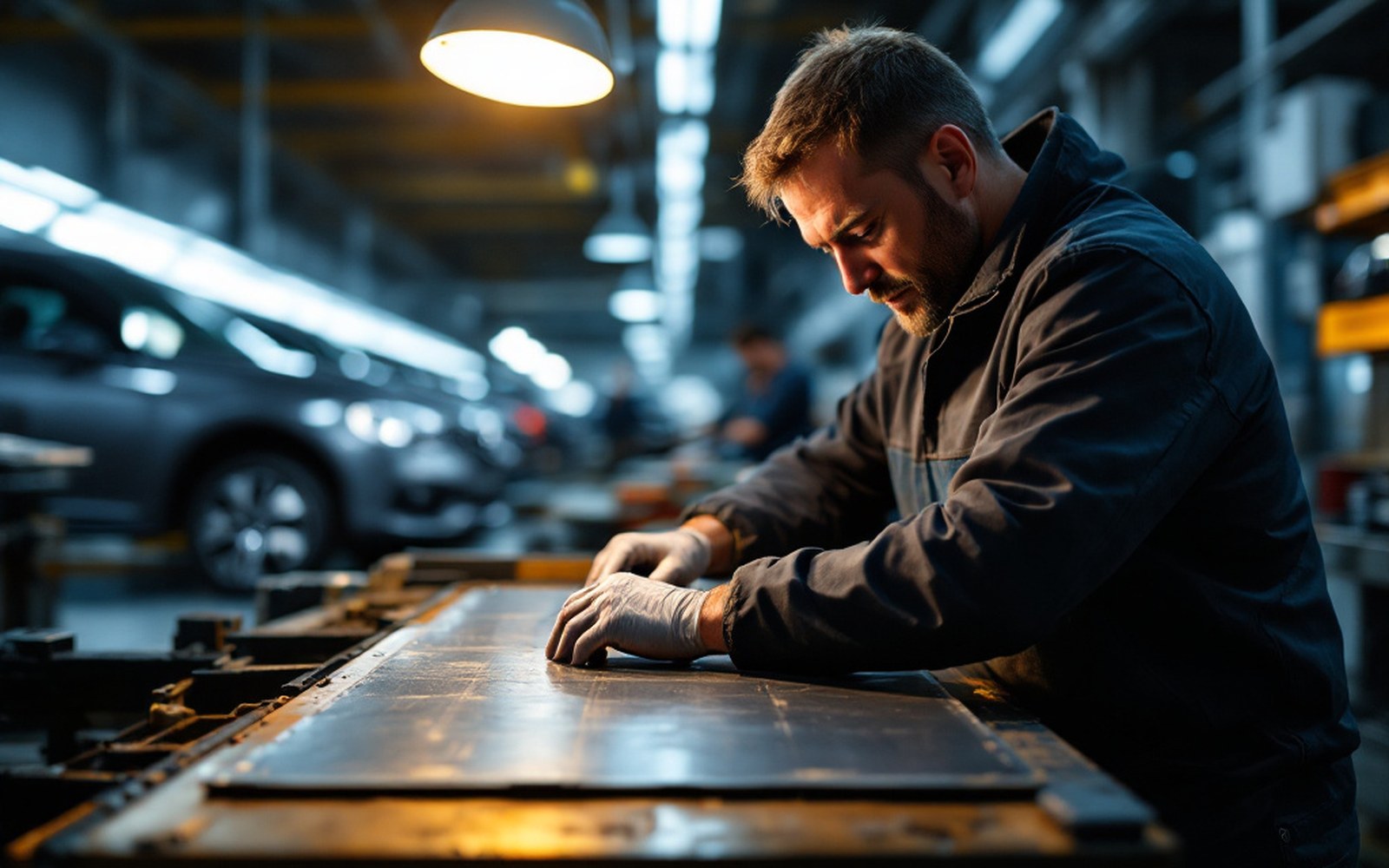
Flatting by hand, under one lamp. This is where the fortnight goes.
The Work That Happens Before the Gun Moves
Strip the budget for a professional full respray and you'll find the material — primer, basecoat, lacquer — is a small fraction of the total. The rest is labour, and that labour is dominated by flatting and curing rather than spraying. Flatting — abrading each coat before the next goes on, to level imperfections and provide mechanical key — is repetitive, exacting work done by hand or with a DA sander across every surface. A single coat on a full vehicle can take longer to flat than it took to apply, and the process repeats across multiple layers.
Curing is the other schedule-setter. Modern two-pack polyurethane systems, which dominate professional refinishing, undergo a chemical cross-linking reaction after application. That reaction is temperature- and humidity-sensitive; a spray booth ↗ with controlled airflow and heat accelerates it, but the chemistry still needs its time. Force-drying at too high a temperature risks solvent popping — microscopic bubbles from trapped solvents escaping — and a surface that looks perfect in the booth can fail in months if curing was rushed. Two weeks for a full car, including bodywork preparation and colour-matching time, is a realistic professional estimate, not a long one.
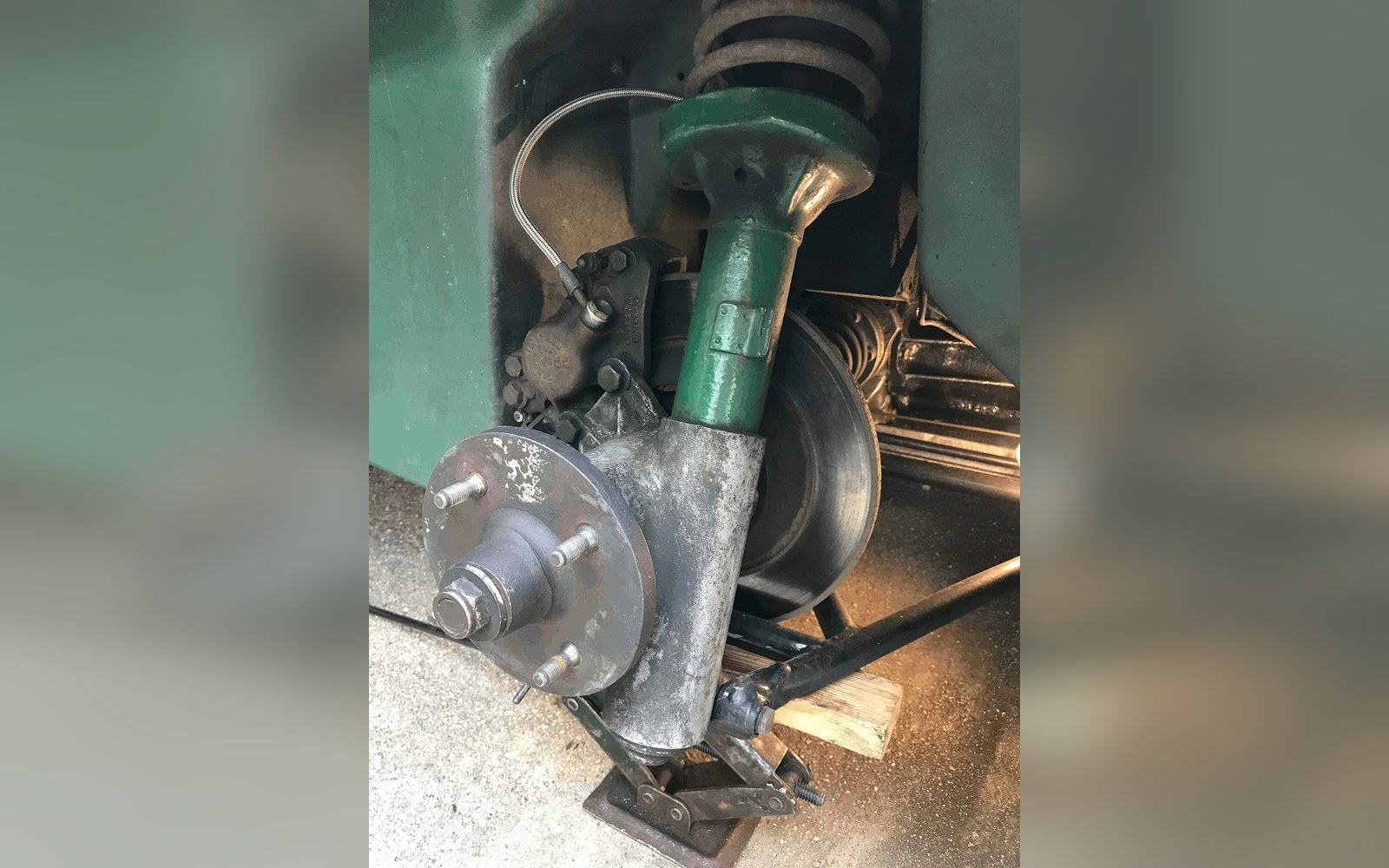
One corner with the wheel off. Every change here is paid for in compliance.
Photo: Lotus Elan Rear Suspension Hub · Wikimedia Commons
Colour choice adds its own variable. A non-standard colour — something outside the manufacturer's current range — requires the workshop to build a match from a base formula, spray test panels, cure them, and compare under standardised lighting. Even a catalogued colour changes across model years as pigment batches and mixing ratios shift; a new panel matched to a ten-year-old car needs optical matching, not just a formula code. The more the budget gravitates toward unusual finishes, the more of that two weeks disappears into preparation rather than execution.
What the time is actually spent on
- Flatting — abrading each cured coat to key it for the next; done by hand or DA sander, often longer per panel than the spray pass itself
- Curing — cross-linking reaction in two-pack polyurethane systems; sensitive to temperature and humidity; cannot be safely rushed
- Colour matching — test panels, curing, optical comparison under standardised lighting; increases with non-standard or aged finishes
- Bodywork preparation — filling, priming, blocking; typically the first days of the two-week schedule
What the owner funds is time in the booth and the preparer's hands. The paint itself — as vehicle refinishing standards from CIELAB colorimetry ↗ illustrate, a field sophisticated enough to have its own perceptual geometry — is almost incidental to the invoice. That inversion surprises most people the first time they see an itemised quote. It shouldn't: a colour nobody asked for has to be conjured, and conjuring takes patience the schedule cannot compress.
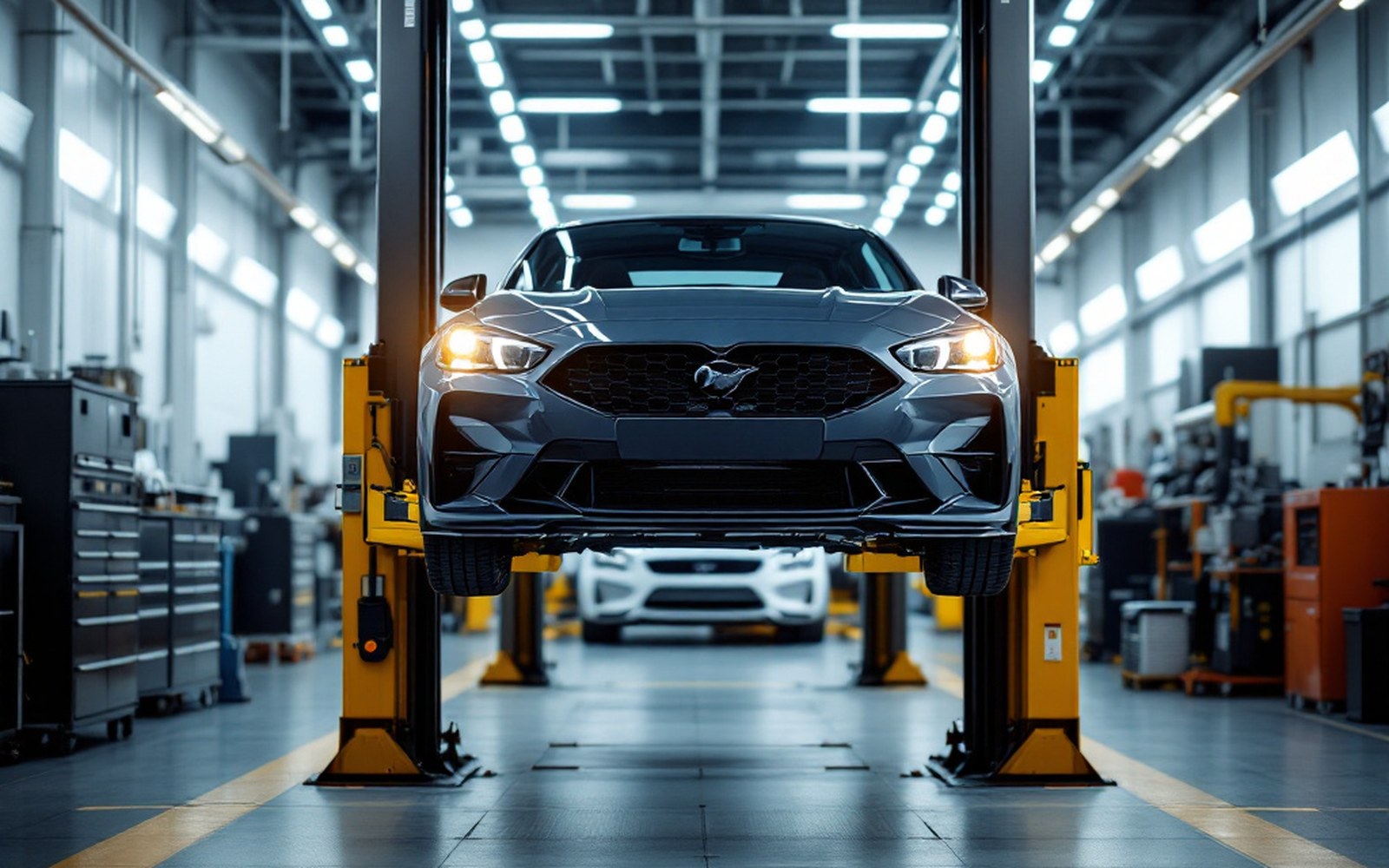
The underside is where the certification questions actually live. Most owners never see it.
Read next in Most of the money goes on the outside