Brakes are heat capacity, not stopping power
The disc size is not about the first stop. It is about the tenth.
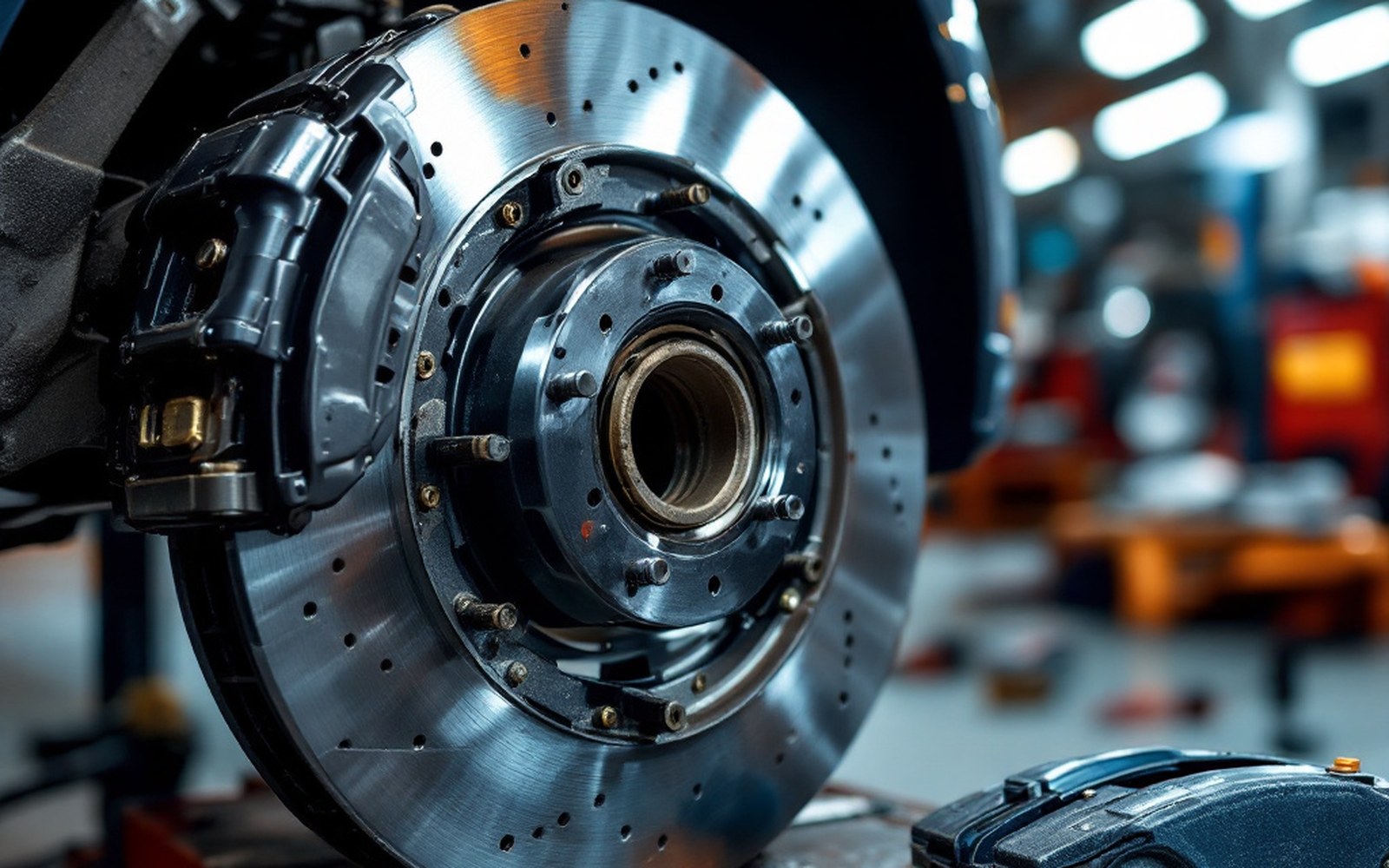
Disc and caliper off the car: capacity, not bite.
What fade actually is
A car's brakes do not convert motion into force — they convert kinetic energy into heat, and everything else follows from that fact. The pad presses the disc, friction generates heat, and that heat has to go somewhere before the next braking event. When it cannot, you get brake fade ↗: the pad compound reaches a temperature where it outgasses, or the fluid in the caliper boils and compresses as vapour instead of transmitting force, and the pedal tells you nothing useful.
The distinction matters because most buyers think of an uprated brake package in terms of stopping distance from a single speed. That figure is almost irrelevant. A standard four-pot setup on a well-sorted road car can lock a tyre from motorway speed; the limit is tyre contact patch, not caliper thrust. What a standard setup cannot always do is repeat that stop eight times down a mountain descent or through a full track session without the pedal going long. Thermal capacity — the ability of the disc, the pad and the fluid together to absorb, store and shed heat — is the engineering problem that larger rotors and exotic compounds actually solve.
The mass, the compound and the fluid
A larger diameter disc contributes in two ways. The extra swept area gives the pad more surface over which to spread heat, and the greater disc mass acts as a thermal sink, absorbing energy before it conducts into the caliper. Bell-and-disc two-piece rotors, used by tuning operations from Brabus to Nismo on performance variants, decouple the iron friction ring from the aluminium hat, which reduces the mass attached to the hub — a genuine unsprung mass saving — while keeping the large swept area. The iron ring can also be vented or grooved to accelerate heat rejection to the airstream, though the geometry of those grooves changes how a pad beds and how evenly it wears.
Preparation is the job. The gun is the last afternoon of it.
Photo: Spray booth · Wikimedia Commons
Pad compound selection sits alongside disc choice because a pad that performs beautifully cold can glaze, crack or deposit unevenly when it is overdriven. High-temperature race compounds often need a warm-up window before they bite at all, which is a real-world trade-off on a car that also sits in traffic. The compromise most aftermarket pads represent is a curve of friction coefficient against temperature: the question is where on that curve the car will actually operate, and a pad optimised for track temperatures will feel wooden on a cold road. Fluid is the third variable and the most commonly overlooked. DOT 4 and DOT 5.1 fluids are rated to dry and wet boiling points defined under FMVSS 116; the wet boiling point, measured after moisture absorption, is the operationally honest number, and it falls faster in a hard-used system than most owners expect.
The thermal chain
- Kinetic energy → friction → heat in pad and disc — the brake's actual job
- Disc mass — acts as a thermal sink between stops; larger disc = more capacity
- Venting and grooves — shed heat to airstream; also change pad bedding behaviour
- Pad compound — friction coefficient varies with temperature; cold-street vs. warm-track trade-off
- Fluid boiling point — wet boiling point (after moisture absorption) is the operational figure; governed by FMVSS 116
- Caliper rigidity — affects pedal feel and even pad-contact distribution, not peak force
What the caliper actually does
A larger caliper with more pistons does not increase the maximum braking force available — again, the tyre decides that — but it distributes clamping force more evenly across the pad face, reducing localised hot spots and the uneven pad deposits that cause judder. A well-designed fixed four- or six-pot caliper also has a more rigid bridge than a sliding single-pot unit, so it deflects less under load and maintains a consistent pad-to-disc contact area. That rigidity is a tactile benefit as much as a thermal one: a stiffer caliper gives a firmer, more progressive pedal.
The cost elsewhere is weight and geometry. A large-diameter disc requires a correspondingly large wheel to clear it — a constraint that feeds back into the unsprung and rotating mass consequences of wheel sizing. Alpina ↗, which holds its own type approval and therefore certifies each wheel-and-brake package as an integrated system, builds the wheel specification around the brake rather than compromising the brake to suit a wheel that was chosen for appearance. That is the difference between engineering a brake package and bolting one on: the system is only as honest as its least-considered component.
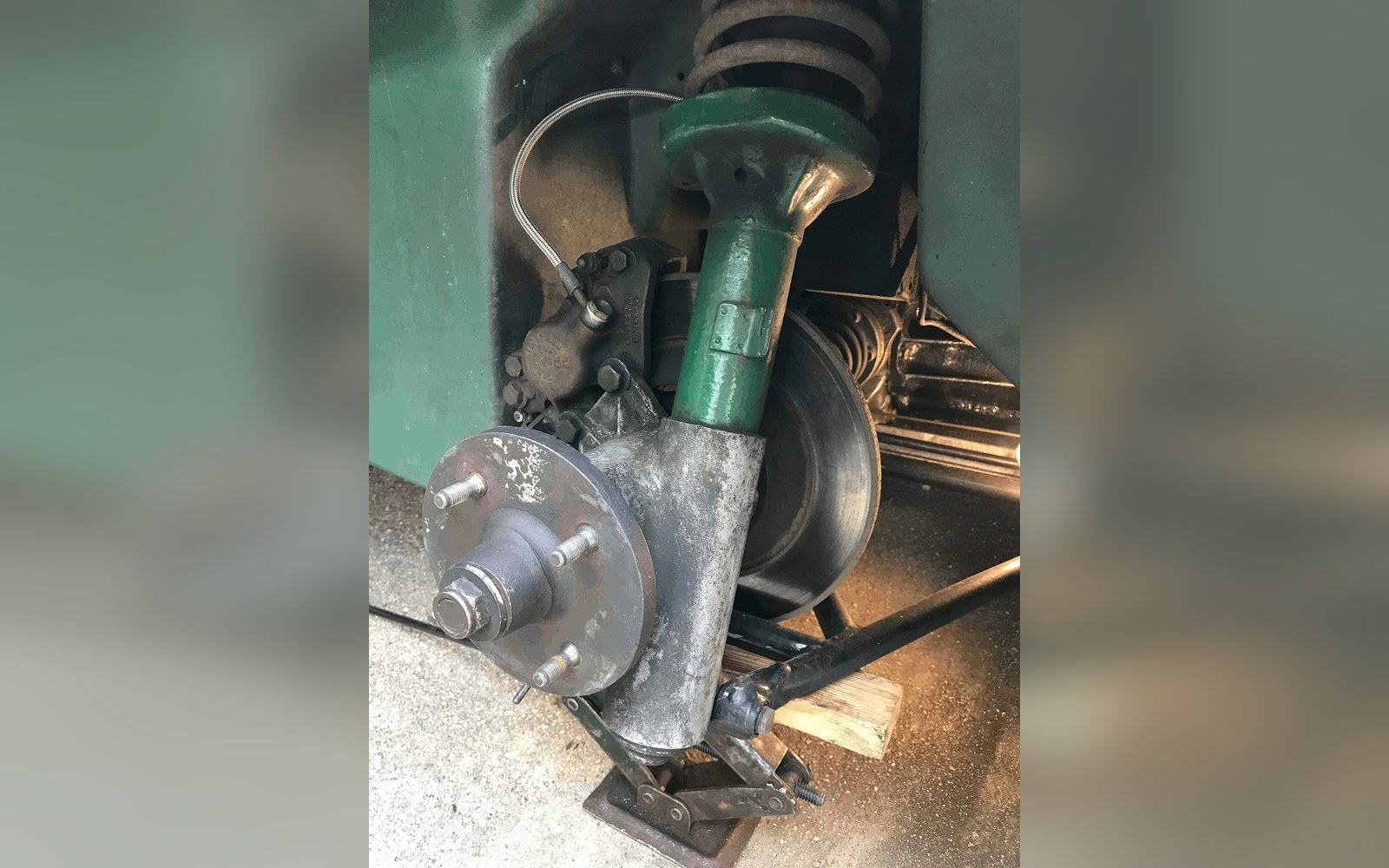
One corner with the wheel off. Every change here is paid for in compliance.
Photo: Lotus Elan Rear Suspension Hub · Wikimedia Commons
The headline on any brake upgrade is not the caliper colour or the disc diameter. It is how many repeated stops that disc can absorb before the fluid sees vapour. Everything else is cosmetic.
Read next in What each change takes from somewhere else