A wheel is the only cosmetic part that fights back
Change the wheel and you change how the car handles, how it stops and how it rides — without touching a single component under the bonnet.
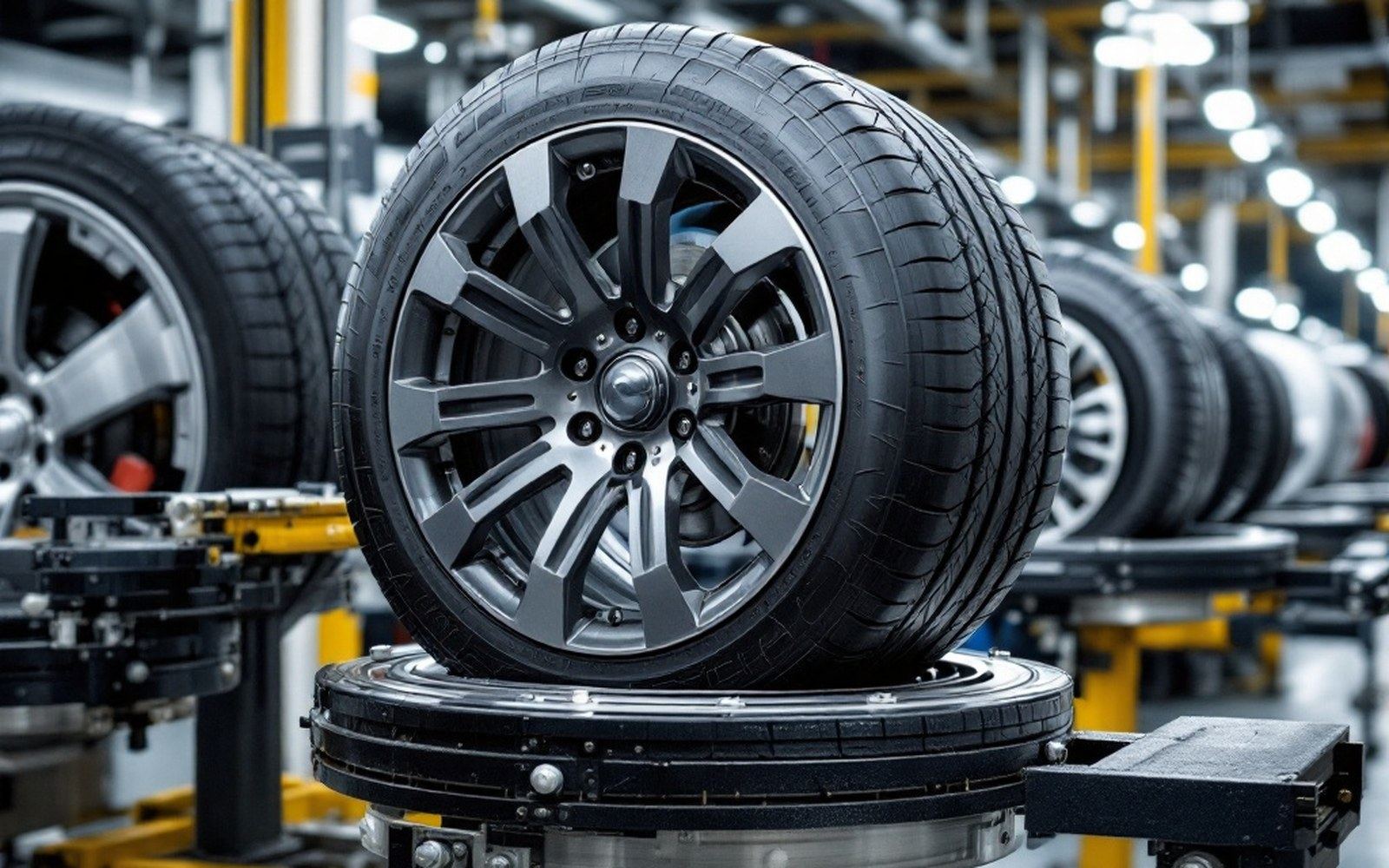
Unsprung, rotating, and at the end of the suspension’s leverage — the worst place to add mass.
The cosmetic part that has physics
A body kit changes the visual mass of a car. A respray changes its colour. Neither does anything the chassis can feel. A wheel is different: it sits at the end of every input the driver makes and every disturbance the road sends back, and its dimensions, its weight and its stiffness all register in the car's behaviour whether the owner intended them to or not. This is what separates wheel selection from every other decision in the cosmetic budget.
Unsprung and rotating mass are real, and a larger wheel usually costs ride and response to buy appearance.
The relevant concept is unsprung mass — the mass of every component that moves with the wheel rather than being supported by the spring. Hubs, knuckles, brake assemblies, the wheels themselves: none of it is cushioned from road inputs before those inputs reach the tyre. Unsprung mass matters ↗ because the spring and damper have to manage the wheel's own inertia every time the road surface changes. Add mass at the wheel and the damper has more to control; reduce it and the wheel follows the road more faithfully, maintaining contact and transmitting both traction and braking force more consistently. This is not a marginal effect on a track-day car. It is real and felt on any car, and it compounds at the rim because a wheel is also a rotating component.
Rotating mass carries an additional penalty beyond its raw weight: rotational inertia, or the resistance of a spinning body to changes in its angular velocity. A wheel that is heavier at its outer edge — deep lips, thick flanges, a heavy tyre — has a higher moment of inertia than one with the same total weight concentrated closer to the hub. That difference appears as a resistance to acceleration and deceleration: the drivetrain works harder to spin the wheel up and harder again when the brakes slow it. Over a full driving cycle the energy demands are real enough that rotational inertia in vehicle wheels is a measurable contributor to fuel consumption, and the automotive industry has pursued low-rolling-resistance and lighter wheel designs for precisely this reason. For the tuner the implication is blunt: a heavier, larger wheel asks more of the engine on acceleration and more of the brakes on deceleration, and the car feels slower even if the power figure has not changed.
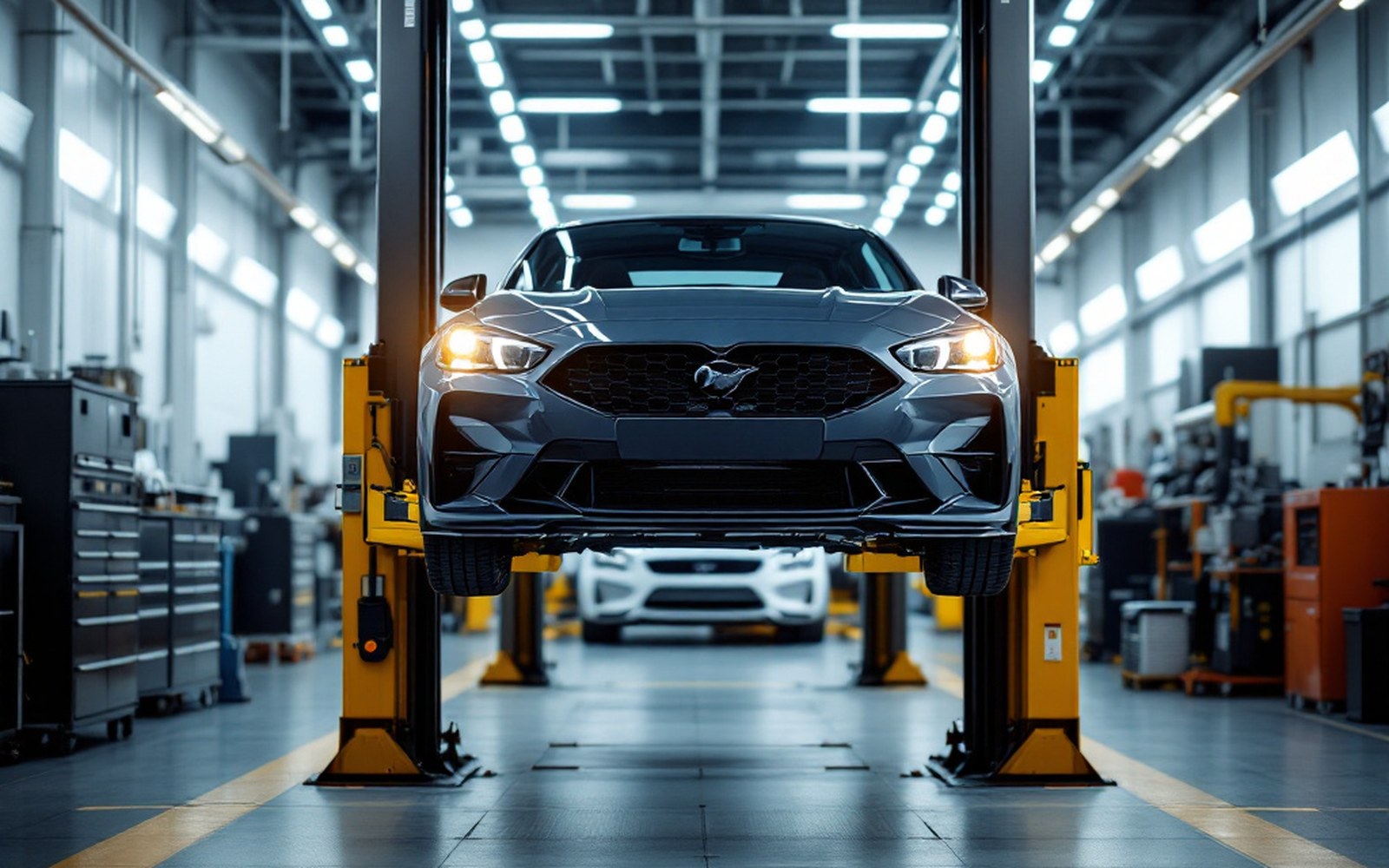
The underside is where the certification questions actually live. Most owners never see it.
Diameter, width and the tyre that connects them
Going larger in rim diameter — say, from the factory seventeen to a twenty — almost always requires a shorter tyre sidewall to keep the overall rolling radius close to standard. That shorter sidewall is stiffer in compression. It deflects less for a given road input, which means more of the shock travels through the tyre and into the wheel and then the suspension rather than being absorbed in the sidewall itself. The suspension now handles a sharper, higher-frequency input, and if the dampers were calibrated for the original tyre profile they are working at the edge of their designed range. The ride quality the owner notices is not a failure of the wheel; it is the tyre doing less of the work it used to do.
The exchange at each corner
- Unsprung mass — everything that moves with the wheel, unsupported by the spring; directly affects how accurately the tyre follows the road
- Rotating inertia — a spinning wheel resists changes in speed; heavier outer edges make this worse even at the same total weight
- Scrub radius — set by offset and suspension geometry; changed by a wheel with a different offset even if track width stays the same
- Sidewall height — shorter sidewall means less tyre flex, sharper inputs reaching the suspension, usually a harsher ride
Width brings its own trade. A wider contact patch improves grip in the sense that more rubber is in contact with the road, but the relationship between width and grip is not linear: road tyre grip is determined primarily by compound and construction, and a wider tyre on the same car adds rolling resistance and aerodynamic drag at the front axle without a proportional return in cornering force on typical road surfaces. In wet conditions the wider footprint needs to displace more water, and an inadequate tread design combined with excess width can increase aquaplaning risk rather than reduce it.
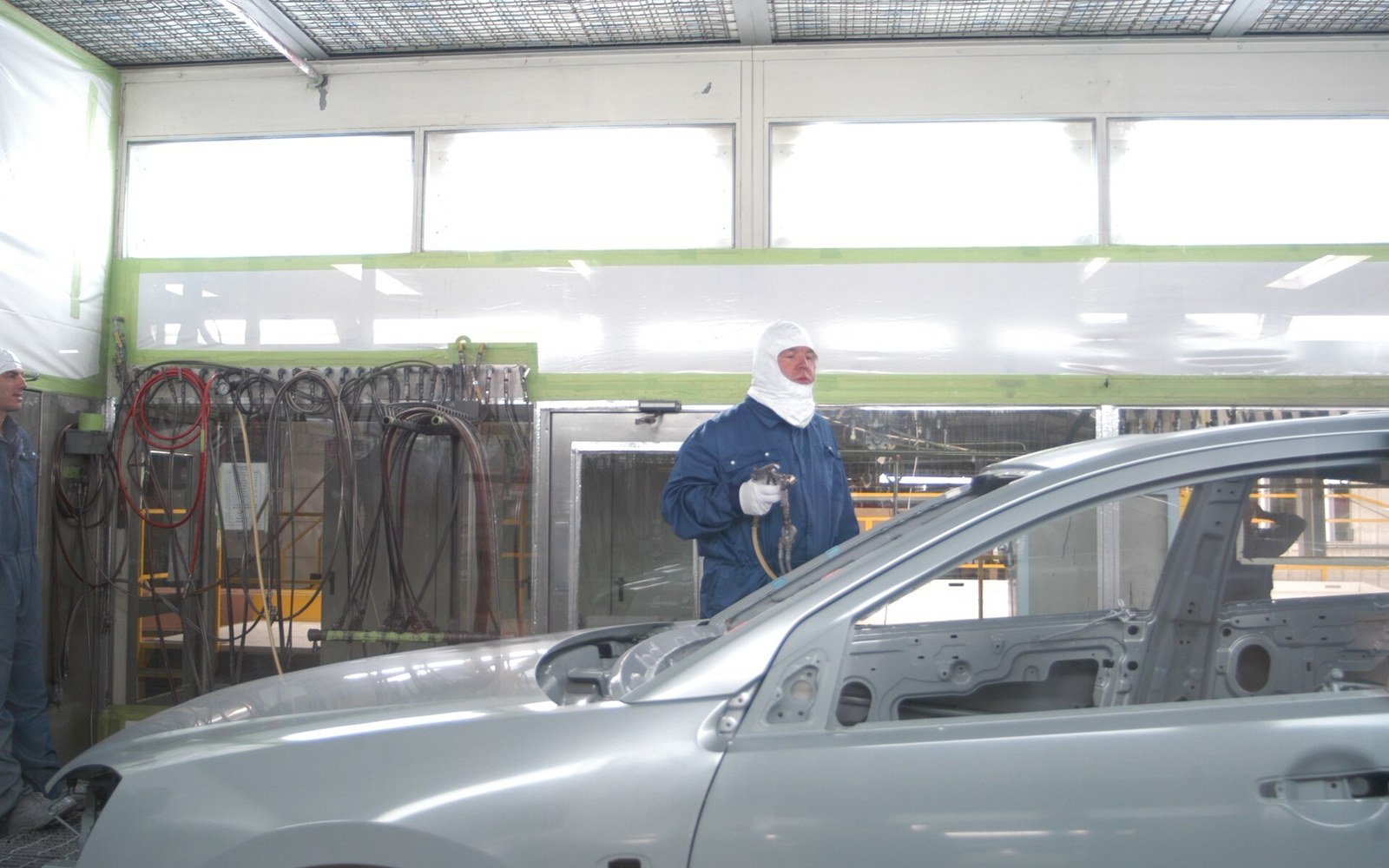
Preparation is the job. The gun is the last afternoon of it.
Photo: Spray booth · Wikimedia Commons
Offset — the distance from the wheel's centreline to its hub-mounting face — changes where the tyre sits relative to the wheel arch and, more importantly, changes the scrub radius at the contact patch. Scrub radius is the distance between the steering axis and the centre of the tyre contact patch, measured at the road surface. Factory engineers set this value deliberately: a small positive scrub radius allows the driver to feel traction loss through the steering; a larger radius increases the self-centring force but also amplifies kickback from road imperfections. Fit an aftermarket wheel with a different offset and you change the scrub radius even if the overall track width stays the same, and the steering response changes with it.
Who gets the system right
- Alpina — BMW-based vehicles with wheel specs developed alongside suspension and brakes; carries independent type approval
- AC Schnitzer — publishes fitment data matched to tested suspension programmes
- Brabus — Mercedes-AMG based; wheels part of homologated packages
- Nismo — Nissan in-house division; wheel designs validated against each car's suspension geometry
The firms that have turned wheel upgrades into serious engineering — Alpina, whose BMW-based cars use wheel specifications developed alongside suspension tuning and carry their own type approval; AC Schnitzer, which publishes tested fitment data for its programme cars; Brabus, working from Mercedes-AMG architecture with wheel and tyre combinations that are part of a homologated package; Nismo, Nissan's in-house performance division, whose wheel designs are validated against the cars' suspension geometry — all treat the wheel as part of a system rather than a selectable visual finish. The wheel an Alpina B5 leaves the factory on is not chosen for appearance. It is chosen because it matches the spring and damper rates, the brake package and the tyre compound in a combination that has been tested as a unit.
What the rim material actually means
Cast aluminium alloys are the industry standard for production wheels: they are cheap to produce, easy to repair and adequate in stiffness for most applications. Flow-formed wheels begin as a cast blank whose barrel is then spun and rolled under pressure, aligning the grain structure and producing a lighter, stronger piece than a purely cast equivalent. Forged wheels are made from a billet that is pressed under very high loads, producing the densest and most consistent grain structure of the three — and, at a given stiffness, the lightest result. The weight saving between a cast and a forged wheel in the same design can be several kilograms per corner, which is a genuine, physics-backed improvement in unsprung and rotating mass, not a marketing abstraction.
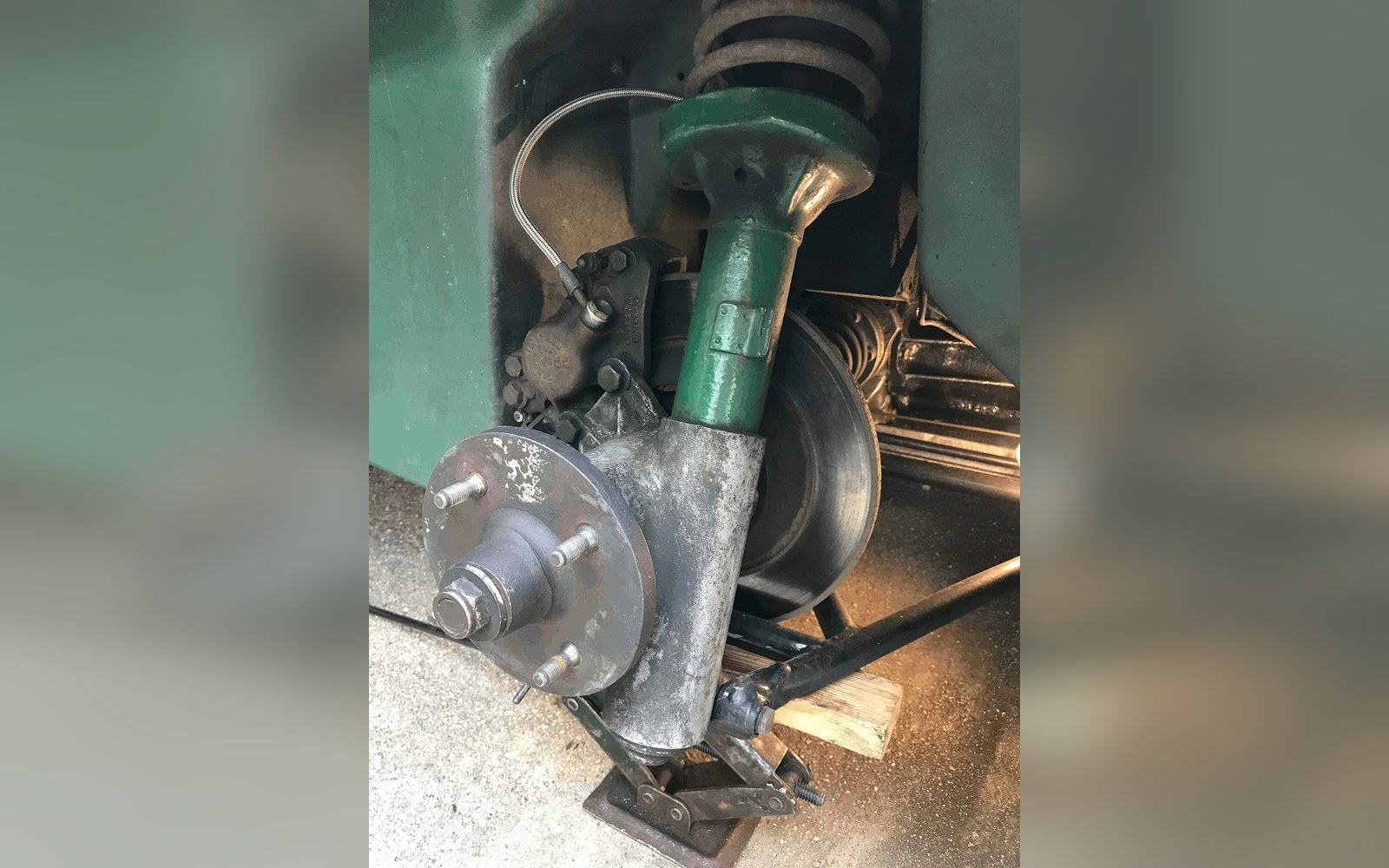
One corner with the wheel off. Every change here is paid for in compliance.
Photo: Lotus Elan Rear Suspension Hub · Wikimedia Commons
Carbon fibre reinforced polymer wheels have entered production on a handful of manufacturer programmes — Ford used a carbon wheel option on the GT, and carbon wheel technology development has been the subject of formal engineering research ↗ — but the repair economics and the sensitivity of CFRP to kerb impacts have kept them away from mainstream aftermarket fitment. A cracked carbon wheel is not a repair job; it is a replacement, and the cost reflects that.
Rim construction hierarchy
- Cast — most common, heaviest for a given stiffness, easiest to repair
- Flow-formed — cast blank, barrel worked under pressure; lighter and stronger than cast
- Forged — billet pressed under high load; densest grain, lightest at equivalent stiffness
- CFRP — lightest of all, but a damaged carbon wheel is a replacement, not a repair
None of this makes the case for keeping the factory wheel. It makes the case for understanding the exchange. A lighter, forged wheel in a slightly larger diameter, fitted with a well-chosen tyre in the appropriate profile, can improve unsprung mass and the driving experience simultaneously. The problem is that the majority of the aftermarket moves in the other direction: heavier cast wheels in larger diameters with low-profile tyres chosen because the combination photographs well. The physics does not care. The car carries the weight, the dampers manage the input and the tyre does less with every millimetre of sidewall that is traded away for visual width. A wheel is the only cosmetic part that fights back, and it wins every time the road surface changes.
Read next in Most of the money goes on the outside