Aero that works, and aero that is jewellery
Real aerodynamic development is expensive, repeatable and measurable. Most of what goes on the back of a road car is none of those things.
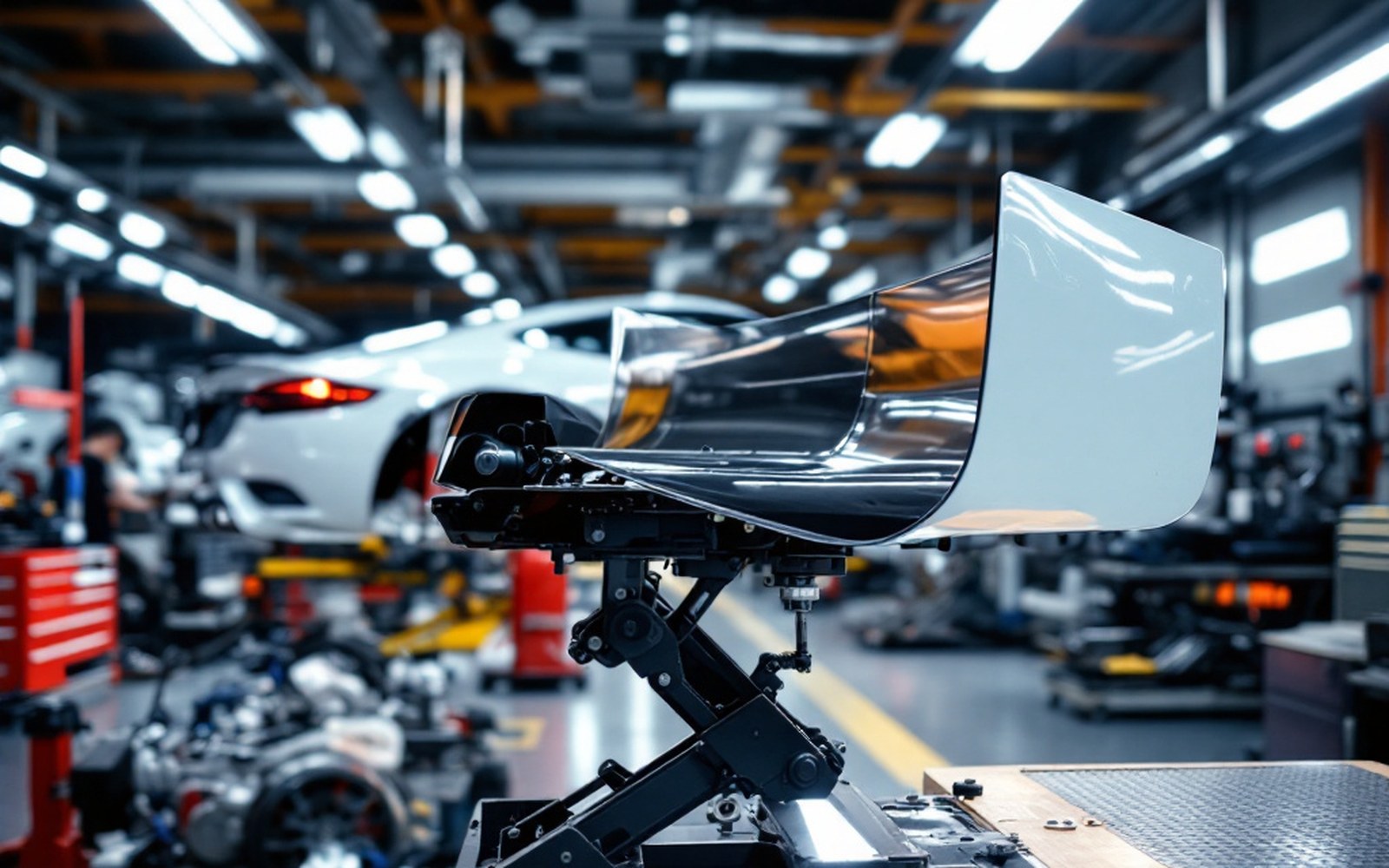
A wing that makes load also makes drag, and needs structure behind it.
The physics don't negotiate
Downforce and drag are not separate problems — they are the same problem. Any surface angled into the airflow to generate downward pressure also generates resistance in the direction of travel. A rear wing on a touring car produces genuinely useful downforce at racing speeds, but it does so at a cost measured in fuel consumption and top-speed deficit. The engineering question is never "how much downforce?" but "how much downforce per unit of drag, at what speed, on which axle?" That ratio — lift-to-drag — is what separates a developed aero package from a shaped piece of fibreglass that someone priced by the kilogram.
The problem with road-car aerodynamics is that most of the forces involved are trivially small below a hundred kilometres an hour. Real aerodynamic load builds with the square of velocity. A component that contributes a meaningful force at 200 km/h is contributing roughly a quarter of that at 100 km/h. On public roads, at public speeds, the increments are so small that driver preference and placebo do most of the work. This is why aerodynamic development ↗ in motorsport is conducted at race speeds in controlled conditions, not estimated by eye from a styling sketch.
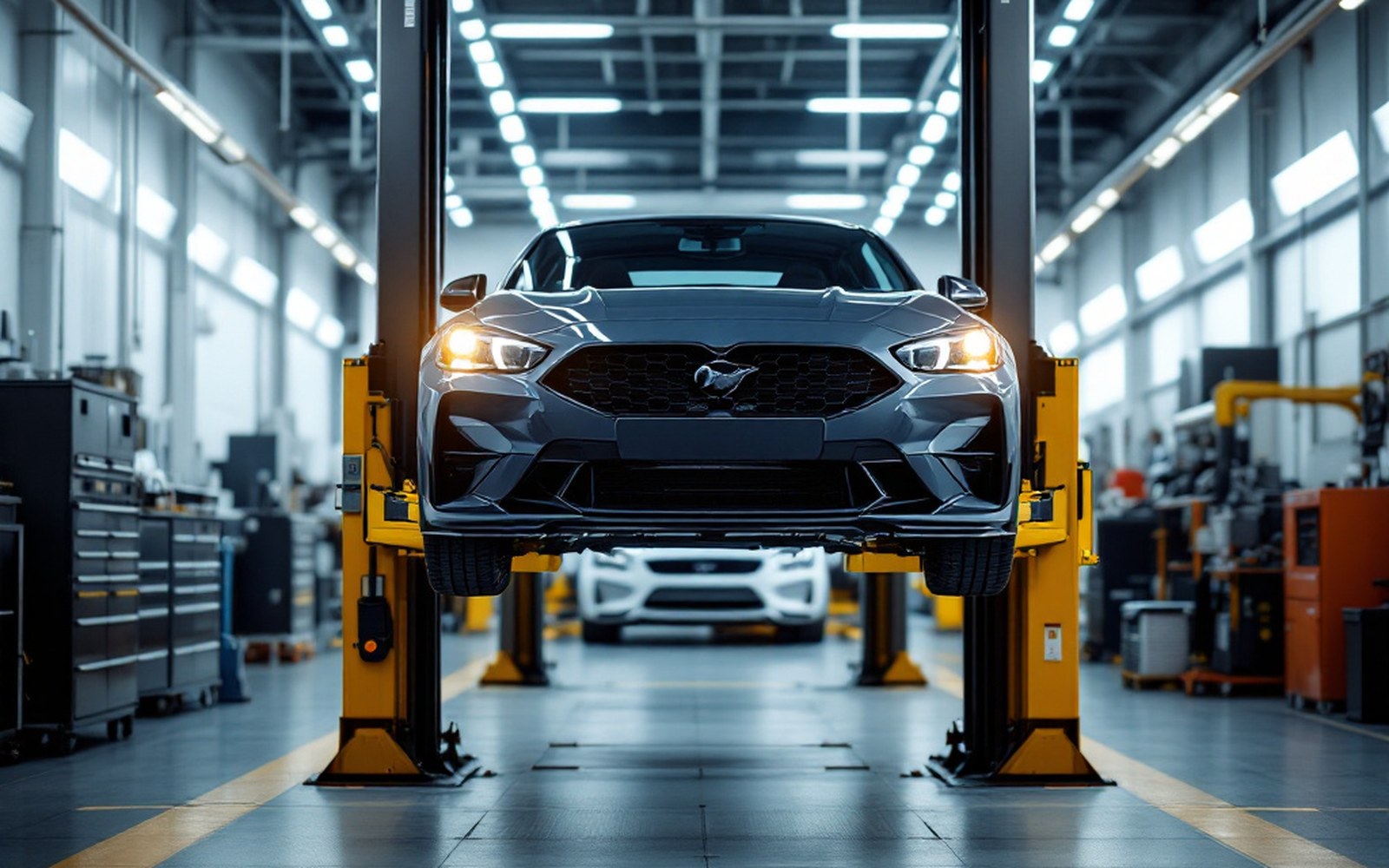
The underside is where the certification questions actually live. Most owners never see it.
What development actually looks like
A component that has been genuinely developed starts in computational fluid dynamics — a simulation environment where pressure gradients and separation points can be examined before any physical prototype is made. It then moves to a wind tunnel, where a scale or full-size model is subject to measured airflow and the forces resolved at each point on the surface are logged. That process takes weeks, costs significantly, and usually produces several iterations before a geometry is settled on. Alpina, which holds small-series type approval from the Kraftfahrt-Bundesamt and is therefore legally a vehicle manufacturer, develops its aerodynamic modifications as part of the whole vehicle sign-off — not as an afterthought bolted on after homologation. So does Nismo, Nissan's in-house performance division, whose GT-R components are developed in conjunction with the motorsport programme that produced them. The certification trail that forces both to treat the car as a system is exactly what keeps the aerodynamics honest.
What makes an aero claim real
- CFD simulation — computational modelling of airflow before prototyping; the first stage of genuine aerodynamic development
- Wind-tunnel correlation — physical testing that either confirms or forces revision of the CFD model; the second stage
- Lift-to-drag ratio — the figure that captures whether a component earns its drag penalty; a higher ratio is better
- Downforce — aerodynamic load pushing the car onto the road; grows with the square of velocity, so minimal at road speeds
- Parasitic drag — resistance added without compensating downforce; the signature failing of purely styled aero
A tuner operating without type approval is under no similar obligation. The body kit is submitted for a visual inspection of fit and finish, not a wind-tunnel correlation. A component that increases drag without producing downforce will not fail any road-car approval test, because road-car approval tests are not aerodynamic-performance tests. They are safety and construction tests. The aero is, in a regulatory sense, ornamental.
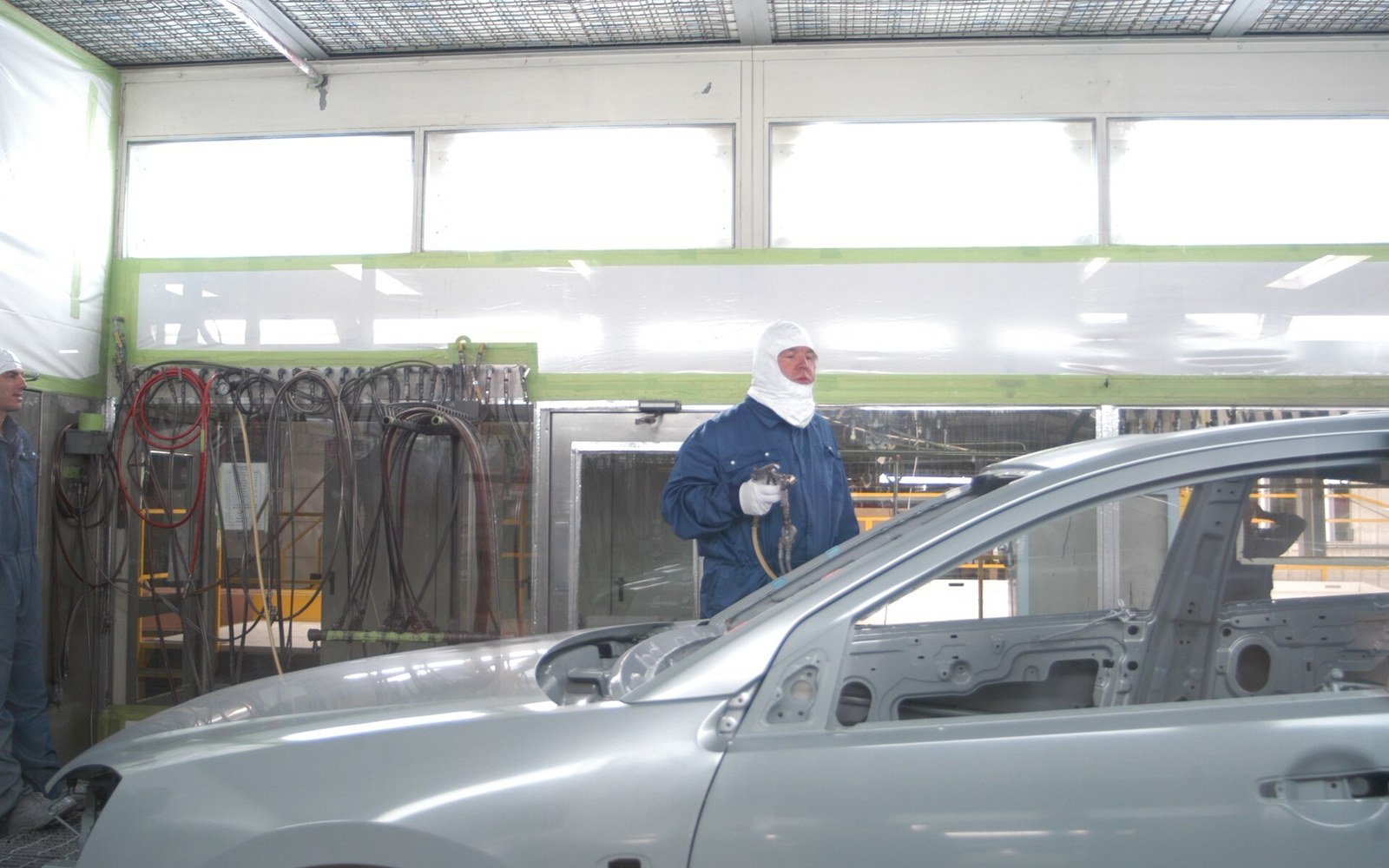
Preparation is the job. The gun is the last afternoon of it.
Photo: Spray booth · Wikimedia Commons
The drag that goes unaccounted
Where a purely styled kit does real, measurable harm is in drag. A splitter mounted at the wrong angle, or a rear diffuser that does not actually expand the underbody airflow because the underbody geometry doesn't support it, can add parasitic drag — resistance without the compensating load. That raises fuel consumption, raises the thermal load on the drivetrain at sustained speed, and if the piece is large enough, measurably worsens the downforce-to-drag balance, reducing stability rather than adding it. The car feels heavier at the nose on a fast motorway bend not because the wing is working, but because it is making the rear light.
Who works at which level
- Alpina — holds KBA small-series type approval; aero developed as part of whole-vehicle sign-off
- Nismo — Nissan's in-house division; GT-R components share a development lineage with the motorsport programme
- AC Schnitzer, Brabus — aftermarket tuners with documented wind-tunnel programmes; data exists and can be examined
- Tuners without type approval — subject to fit/finish checks, not aerodynamic-performance verification
That is not an argument against aftermarket aero. It is an argument for knowing which kind you are buying. AC Schnitzer ↗ and Brabus both produce components for which wind-tunnel data exists and can, in principle, be examined. The claim is not that every piece sold under those names has been optimised, but that those organisations have the infrastructure to optimise, which is the starting condition for work that is not purely cosmetic. Most aero sold at a much lower price point does not have that infrastructure behind it. It has a stylist and a mould shop, which is a legitimate business — but the customer who believes they are buying performance should ask to see the data. That question usually settles the matter very quickly.
Read next in Most of the money goes on the outside