The warranty question
Who carries the liability after a modification is a contractual matter, and it decides what a franchised dealer will touch.
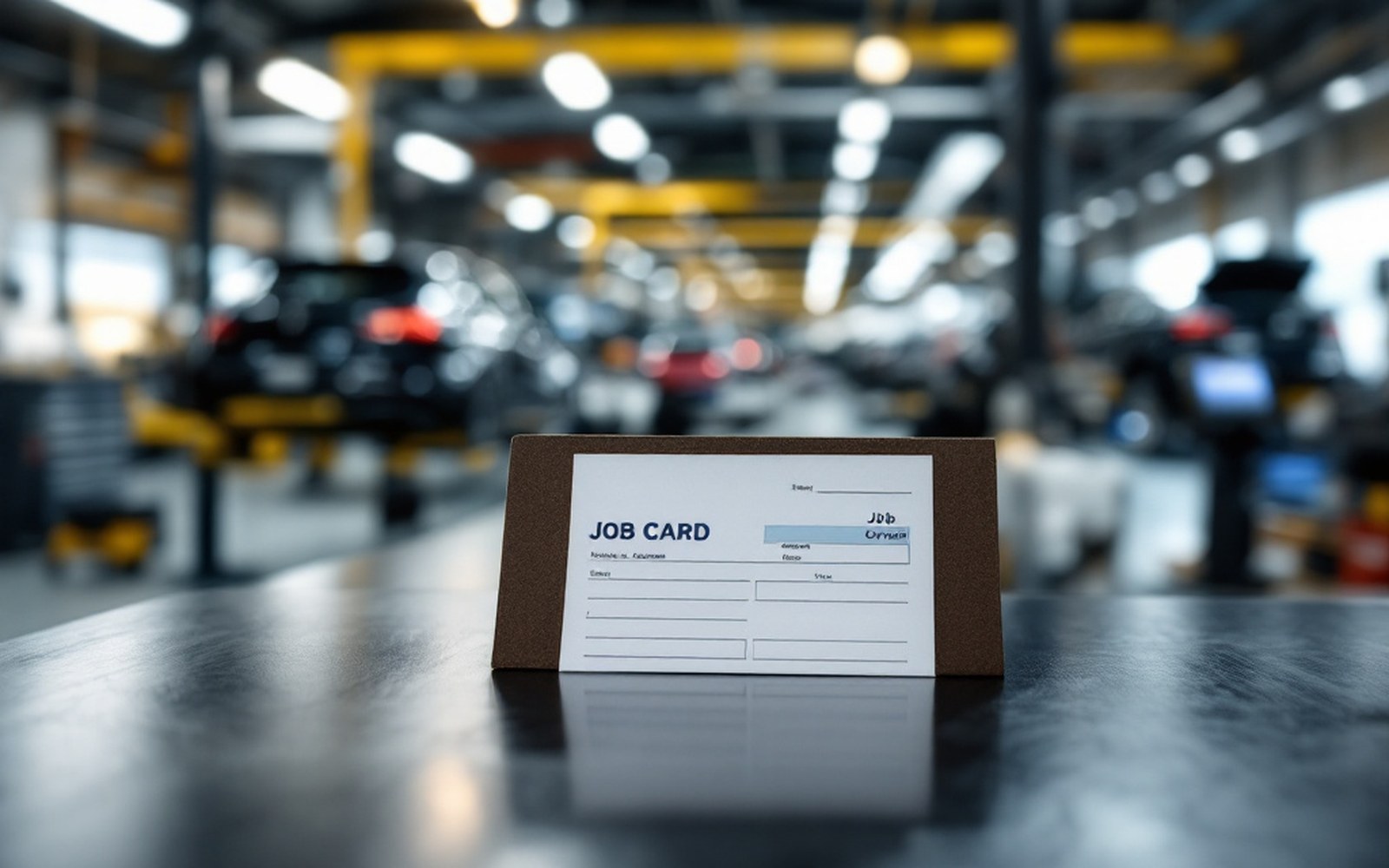
The job card is where liability changes hands, quietly and in writing.
The chain of obligation
A new car carries two distinct layers of protection that buyers often treat as one. The first is the statutory guarantee required under consumer law in most markets — in the European Union, sellers must remedy defects that existed at the point of sale. The second is the manufacturer's voluntary warranty, a contractual document written entirely on the manufacturer's terms. The statutory layer cannot be waived. The voluntary one can be restricted, limited and conditioned in ways that buyers rarely read until something breaks.
Who carries the liability after a modification is a contractual matter and it decides what a franchised dealer will touch.
Modification lives in that second layer. A manufacturer's warranty does not automatically void the moment an owner fits an aftermarket component — the law in most jurisdictions is more precise than that. In the United States, the Magnuson-Moss Warranty Act prevents a manufacturer from voiding a warranty in full simply because unrelated aftermarket parts were fitted. The causal link matters: the warranty claim must be denied on the grounds that the modification caused the failure, not merely that a modification exists. European consumer protection frameworks carry broadly similar logic. But the practical reality at a franchised dealer is rather different from the legal principle.
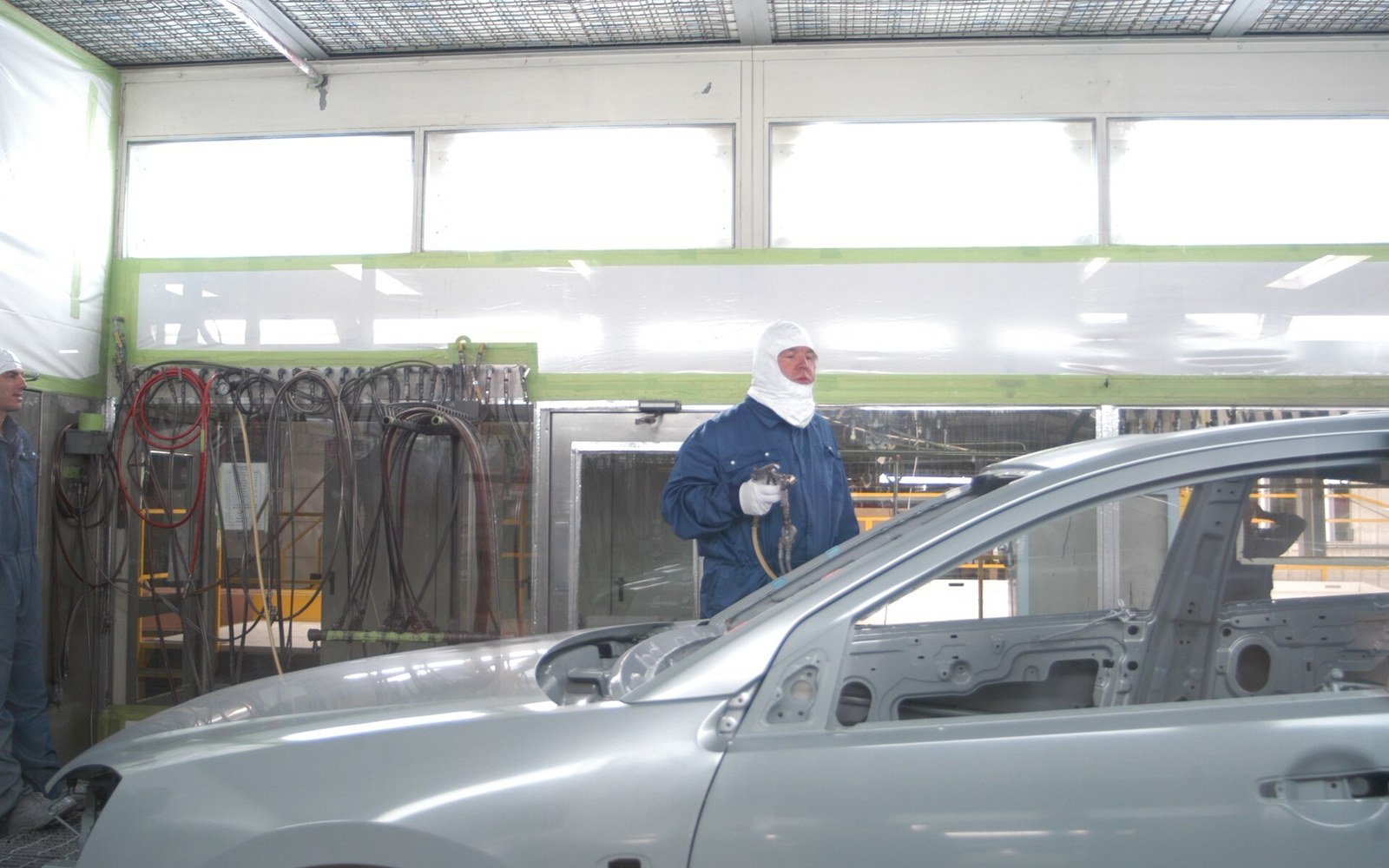
Preparation is the job. The gun is the last afternoon of it.
Photo: Spray booth · Wikimedia Commons
What a franchised dealer will actually touch
A franchised dealer operates under a franchise agreement with the manufacturer, and that agreement governs what the dealer is authorised to repair under warranty and what labour the manufacturer will reimburse. The dealer is not a neutral party. When a modified car arrives with a drivetrain complaint, the path of least resistance — for the dealer's own administration — is to flag the modification and refer the warranty decision upward. The manufacturer then investigates whether a causal link exists. That investigation takes time, and the car sits.
The practical effect is that modifications to systems adjacent to a likely failure point carry a real risk of warranty friction even where the legal position is defensible. A suspension modification does not bear on a warranty claim for, say, a window regulator. But a recalibrated engine management system sits directly in the path of any drivetrain complaint, and demonstrating that it did not contribute to a turbocharger failure is a burden that, in practice, often ends up falling on the owner, even though the manufacturer must show causation.
Who carries what
- Statutory consumer guarantee — cannot be waived; seller must remedy defects present at point of sale
- Manufacturer's voluntary warranty — contractual; can be restricted and conditioned
- Part supplier warranty — covers the component only; consequential damage almost always excluded
- Type-approved tuner warranty (e.g. Alpina, Brabus) — replaces the manufacturer's warranty on modified systems; liability transfers cleanly
- Franchised dealer — not a neutral party; operates under a franchise agreement that governs reimbursable warranty work
This is precisely where the position of houses such as Alpina ↗, Brabus, AC Schnitzer ↗ and Nismo is structurally different from a customer-fitted modification. Where a tuning house holds type approval — meaning its conversion has been certified as a whole vehicle — the house itself takes on the warranty obligation for the elements it has changed, often replacing the manufacturer's warranty on those systems entirely. Alpina, which holds its own manufacturer codes and issues vehicles through BMW's dealer network, provides warranty coverage on its cars as a manufacturer in its own right. The liability does not fall into a gap; it transfers cleanly. Nismo's relationship with Nissan's dealer structure operates similarly for approved builds, with the work covered under a defined scope rather than left as an unanswered question.
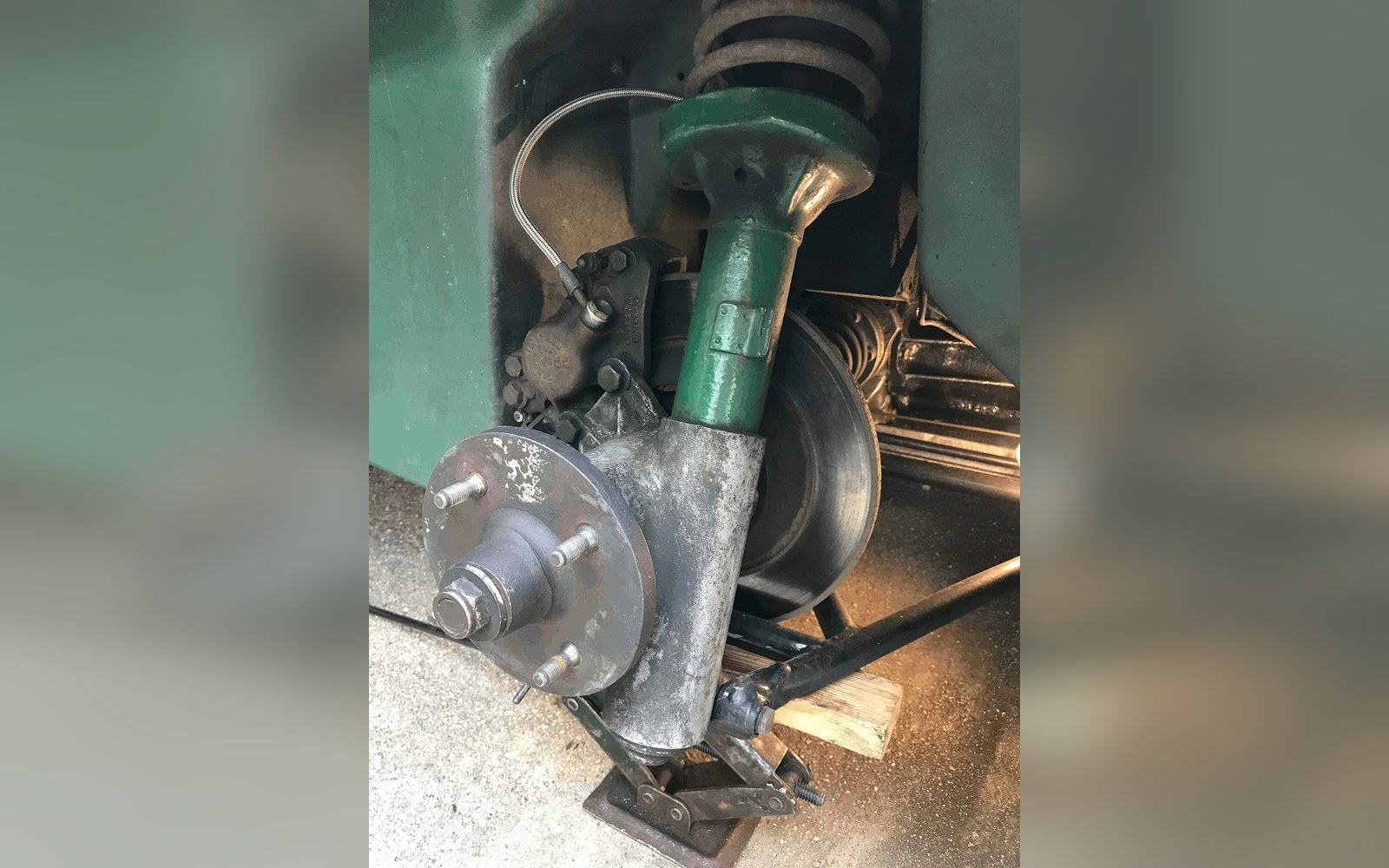
One corner with the wheel off. Every change here is paid for in compliance.
Photo: Lotus Elan Rear Suspension Hub · Wikimedia Commons
The gap that most modifications fall into
Customer-fitted parts occupy neither position cleanly. The part supplier typically offers a warranty on the component itself — it will be replaced if it fails. What is not covered is the consequential damage: the bearing that failed because the modified camshaft altered oil flow, or the gearbox that suffered because the power increase changed the load cycle. Consequential damage claims are expensive precisely because they are difficult to attribute, and the contractual position of the part supplier usually excludes them explicitly.
The risk gradient
- Lowest warranty friction: cosmetic bodywork, wheel changes, interior trim
- Medium friction: suspension, brake system changes (adjacent to mechanical failures)
- Highest friction: engine management recalibration, forced induction, drivetrain load changes — expensive failures, hard to attribute
The owner of a modified car that remains on a manufacturer's warranty is therefore managing a risk allocation problem as much as an engineering one. The modifications that carry the lowest warranty exposure are those furthest removed from any plausible failure mode: cosmetic bodywork, most wheel changes, interior trim. The modifications that concentrate risk are those touching engine management, forced induction, cooling and drivetrain — the systems that fail expensively and whose failures are difficult to attribute to a single cause. That is not an argument against modification. It is an argument for understanding, before work is authorised, exactly who will be liable when the car returns to a workshop — and for what.
Read next in A plate is the difference