Why the factory did not
The gap between what a manufacturer could have done and what it chose to do is almost never a question of engineering. It is a question of liability.
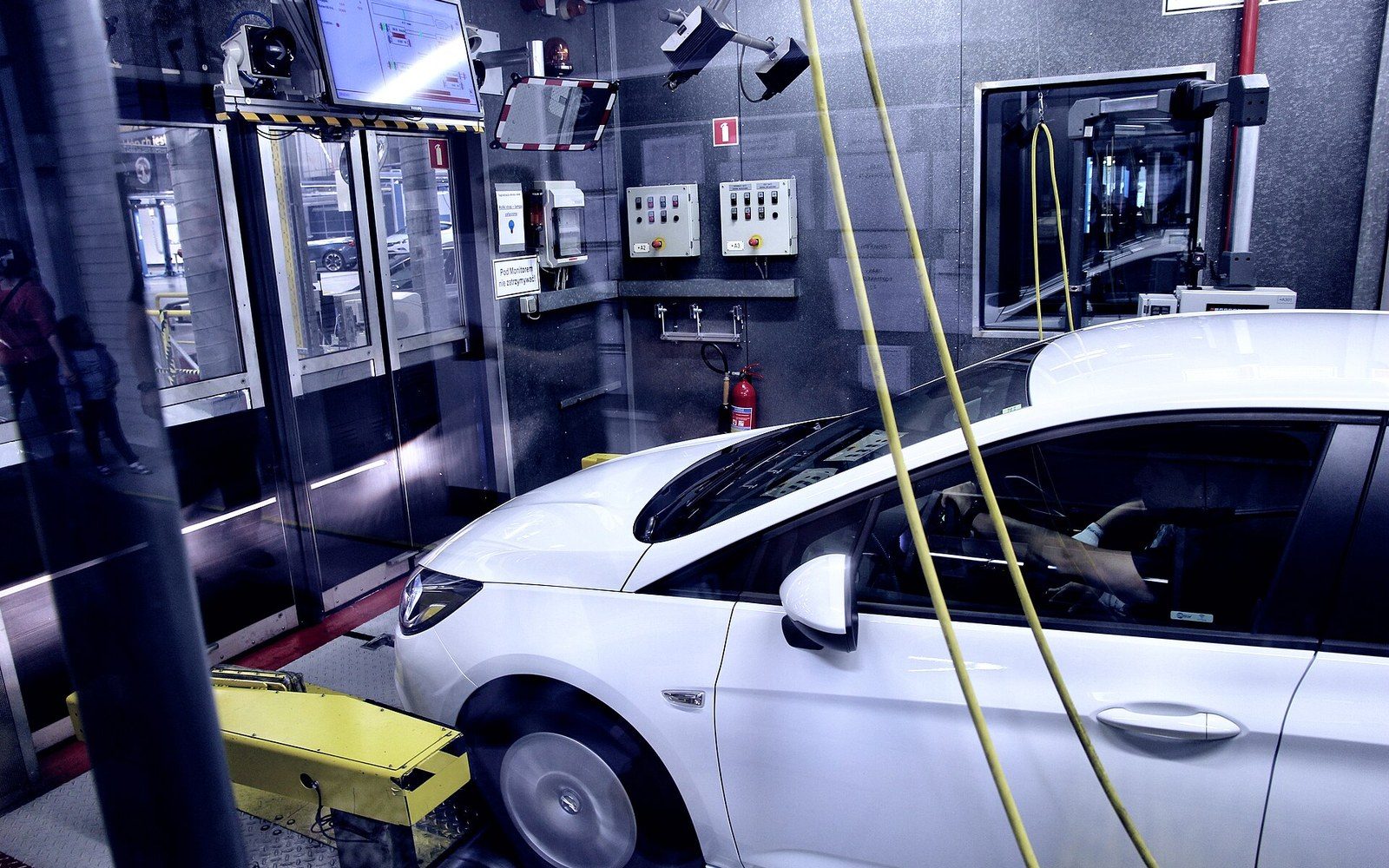
A chassis dynamometer in an emissions cell — the test the factory has to pass and the tuner does not.
Photo: 005 Chassis dynamometer car testing in car factory - Opel Factory in Gliwice, Poland - Rollenprüfstand · Wikimedia Commons
The constraints were always the product
Walk into any major OEM — BMW, Renault, Nissan, take your pick — and the engineers who built the base car were almost certainly aware of more power, lower ride height and harder brakes. They will have simulated them, argued for them, and, in most cases, lost the argument. Not to a rival engineer but to a certification calendar, a warranty reserve and a durability protocol that runs to a hundred thousand kilometres of abuse road before a single car reaches a customer.
Emissions certification, warranty exposure and durability testing over a decade rather than a weekend explain most of the difference.
That protocol exists because type approval is not just a stamp on a single component. It is a whole-vehicle certification that covers emissions, noise, safety structures and system interactions simultaneously. When an OEM raises boost pressure, it does not simply retest the engine; it retests the engine's effect on the catalytic converter, the effect of that on tailpipe emissions, the effect of those emissions on the certification class, and then the knock-on consequences for every market in which the car is sold. The European Union's whole-vehicle type approval framework, administered under what became Regulation (EU) 2018/858 ↗, requires that changes affecting certified parameters trigger a new conformity assessment. A factory tune is never just a tune.
Emissions is where this bites hardest. A modern turbocharged petrol engine lives on a knife-edge between combustion efficiency and NOx production. Every additional degree of ignition advance that liberates power also risks pushing combustion temperatures into the range that drives NOx formation upward, and the margins in the certification test are measured in single-digit percentages. The knock margin — the gap between the calibrated ignition timing and the onset of destructive detonation — is already set to extract near-maximum thermal efficiency while surviving 95-RON fuel on a hot day in Valencia. A tuner with a rolling road and a wideband lambda sensor can chase the limit in a single afternoon; the OEM has to stay safely behind it in every territory and every ambient condition for the life of the car.
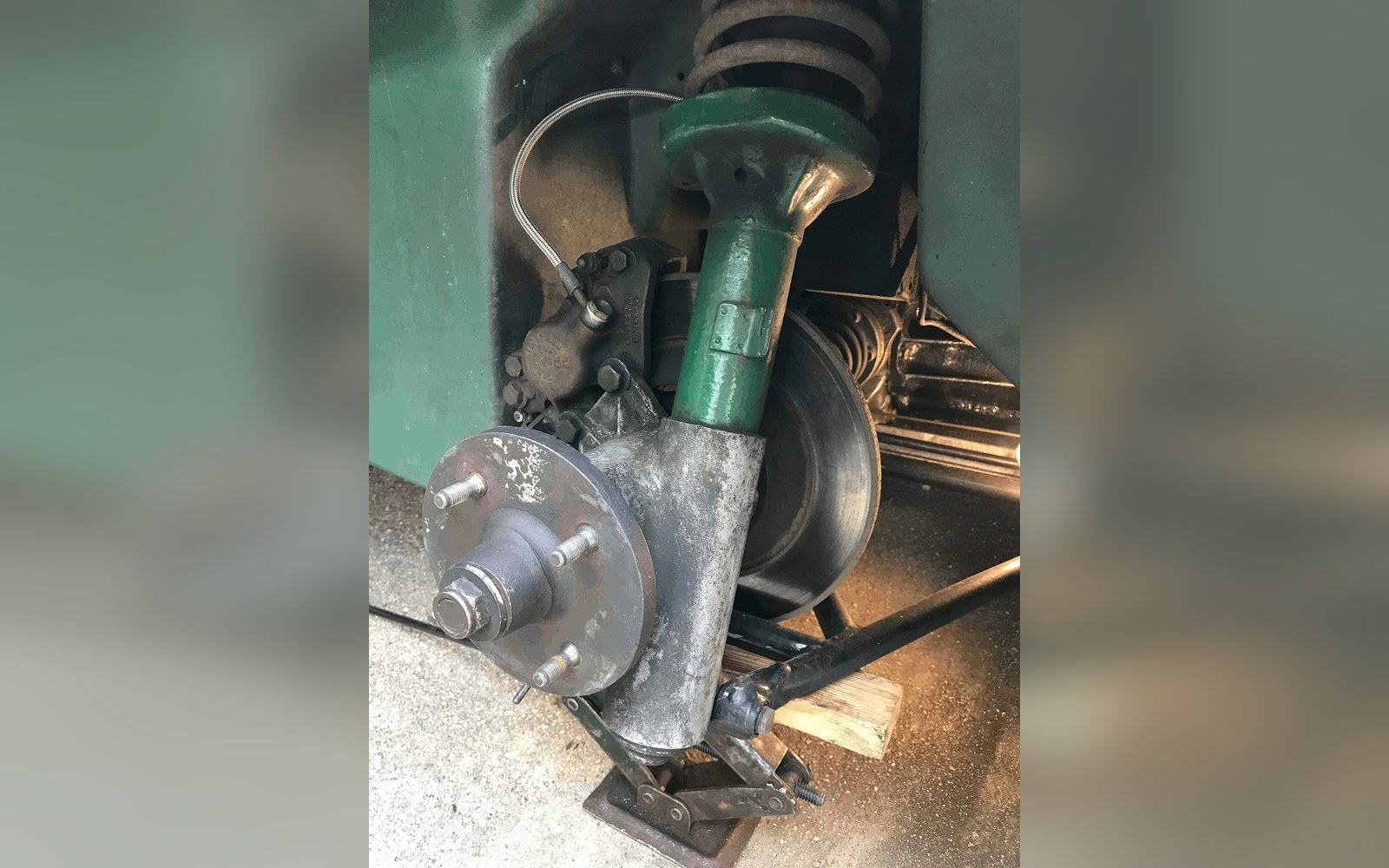
One corner with the wheel off. Every change here is paid for in compliance.
Photo: Lotus Elan Rear Suspension Hub · Wikimedia Commons
The decade the tuner did not spend
Durability is the dimension that never shows on a specification sheet. A manufacturer validates a powertrain not for peak performance but for a design life — typically ten years or a hundred thousand miles, whichever arrives first, stress-tested to multiples of that figure in accelerated testing. Bearings are sized for sustained load at elevated oil temperatures. Transmission ratios are chosen knowing the torque multiplication the engine will eventually produce after a decade of seal wear and carbon accumulation. The calibration accommodates all of that degradation without the car becoming unreliable.
Why the OEM stopped short — the three constraints
- Emissions certification — re-tuning triggers whole-vehicle recertification across every market
- Durability validation — manufacturers test to design-life multiples; tuners test to demonstration standard
- Warranty reserve — higher torque and power raise actuarial failure rates across an entire fleet
A tuner validates for a demonstration. That is not a criticism; it is a different job. Alpina, which has held its own vehicle identification and type approval since 1983 and submits its cars to TÜV certification, is one of the very few independents that genuinely spans both worlds: it takes the factory car, rebuilds key components and re-certifies the result as a new vehicle. Brabus does the same with Mercedes products, and AC Schnitzer ↗ submits selected modifications through the German KBA approval process. Nismo, operating within Nissan's own corporate structure, has access to validation infrastructure that no independent tuner can replicate. What separates these four from an uncertified modification is not the quality of the engineering but the documentation of its longevity.
The distinction matters most when a component interacts with something it was never tested against. Forced induction is the clearest case: raise the charge pressure and you raise exhaust gas temperature, which shortens turbine life, which alters backpressure, which shifts the boost curve. None of those second-order effects are visible on a single dyno run. They accumulate over tens of thousands of kilometres, and the OEM's validation process exists specifically to find and fix them before the car leaves the factory. A harder suspension geometry change carries the same logic — altering the roll centre to sharpen cornering loads every subframe bush, wheel bearing and track rod end differently, and the manufacturer's fatigue testing would have explored exactly the loading that the standard geometry imposes. The modified geometry has never been in that rig.
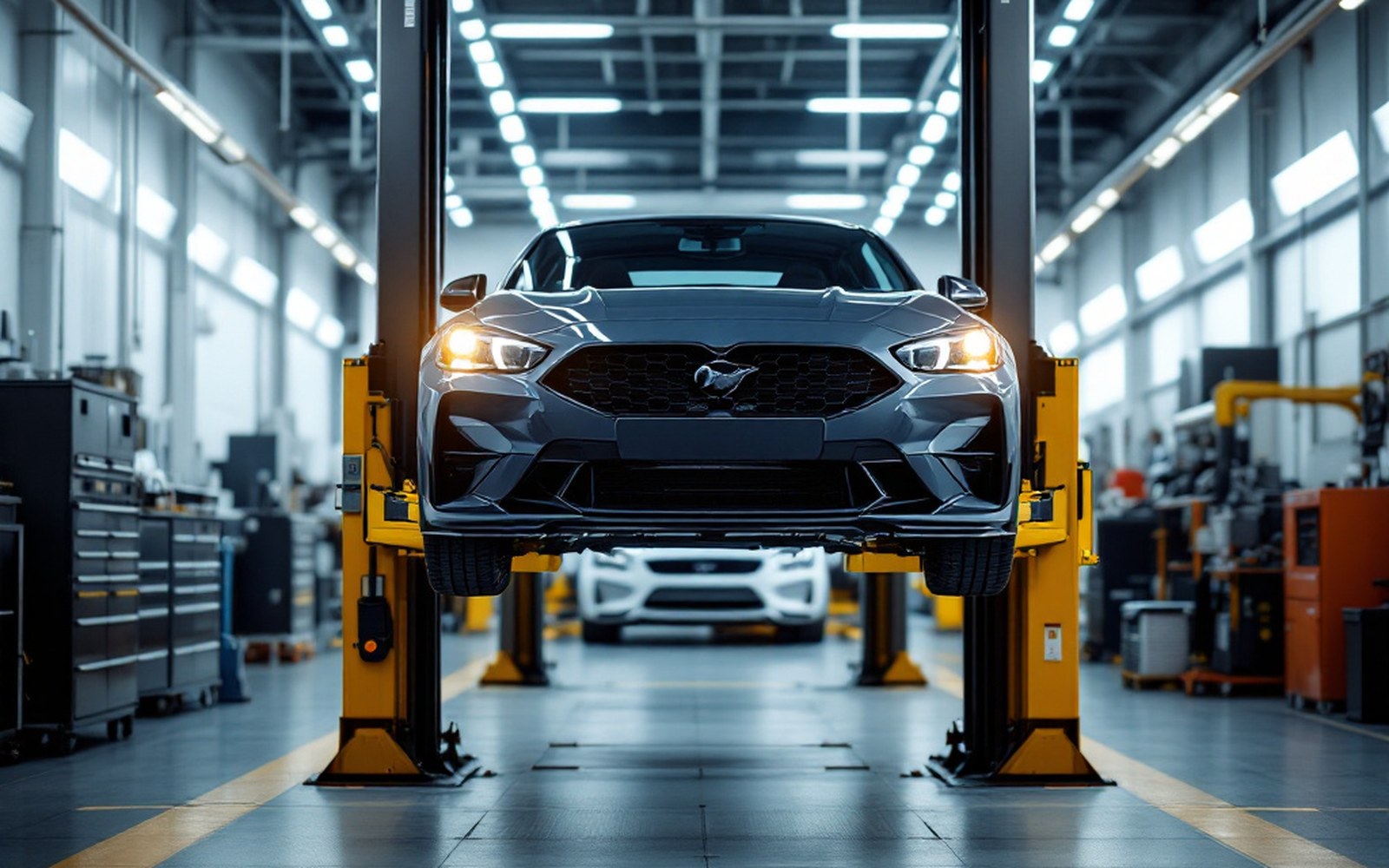
The underside is where the certification questions actually live. Most owners never see it.
The warranty the customer carries
When a manufacturer chooses not to offer a sportier calibration as standard, it is protecting the warranty reserve — a real financial liability, provisioned on the balance sheet at the time of sale, that covers every recall, every in-warranty repair and every consequential failure the car generates in its first years. Increase peak torque and the risk of gearbox wear, drivetrain fatigue and bearing failure all go up. The actuarial table for the provisioning changes. An OEM that builds a hundred thousand cars has to model those failure rates across the whole fleet; a boutique tuner who modifies fifty cars in a year has nothing like the same exposure, and so nothing like the same incentive for conservatism.
The four tuners who went further
- Alpina — holds independent type approval; TÜV-certified vehicles with new VINs since the 1970s
- Brabus — re-certifies Mercedes-based builds as new vehicles
- AC Schnitzer — submits selected modifications through the German KBA (Kraftfahrt-Bundesamt) approval process
- Nismo — operates within Nissan's corporate validation infrastructure
This is also why the cosmetic work tends to absorb the largest share of a typical modification budget — paint, body panels and wheels carry no certification implications and no meaningful warranty risk, which makes them comparatively unconstrained. The engineering modifications, by contrast, are precisely the ones where the factory's caution was most deliberate. Every item on the performance upgrade list represents a calculation the OEM already made and declined, and the reason it was declined is sitting in a file somewhere.
Tuners who do the job properly — who re-certify, who test to a meaningful durability standard, who carry liability for the whole vehicle rather than the individual part — are, in structural terms, acting as manufacturers with the durability obligations that implies. Most do not, because the economics do not support it. That is the honest trade-off: the modification can be real, well-executed and genuinely satisfying to drive, and still represent a gamble that the factory chose not to take, for reasons that were always more about time and liability than about engineering.
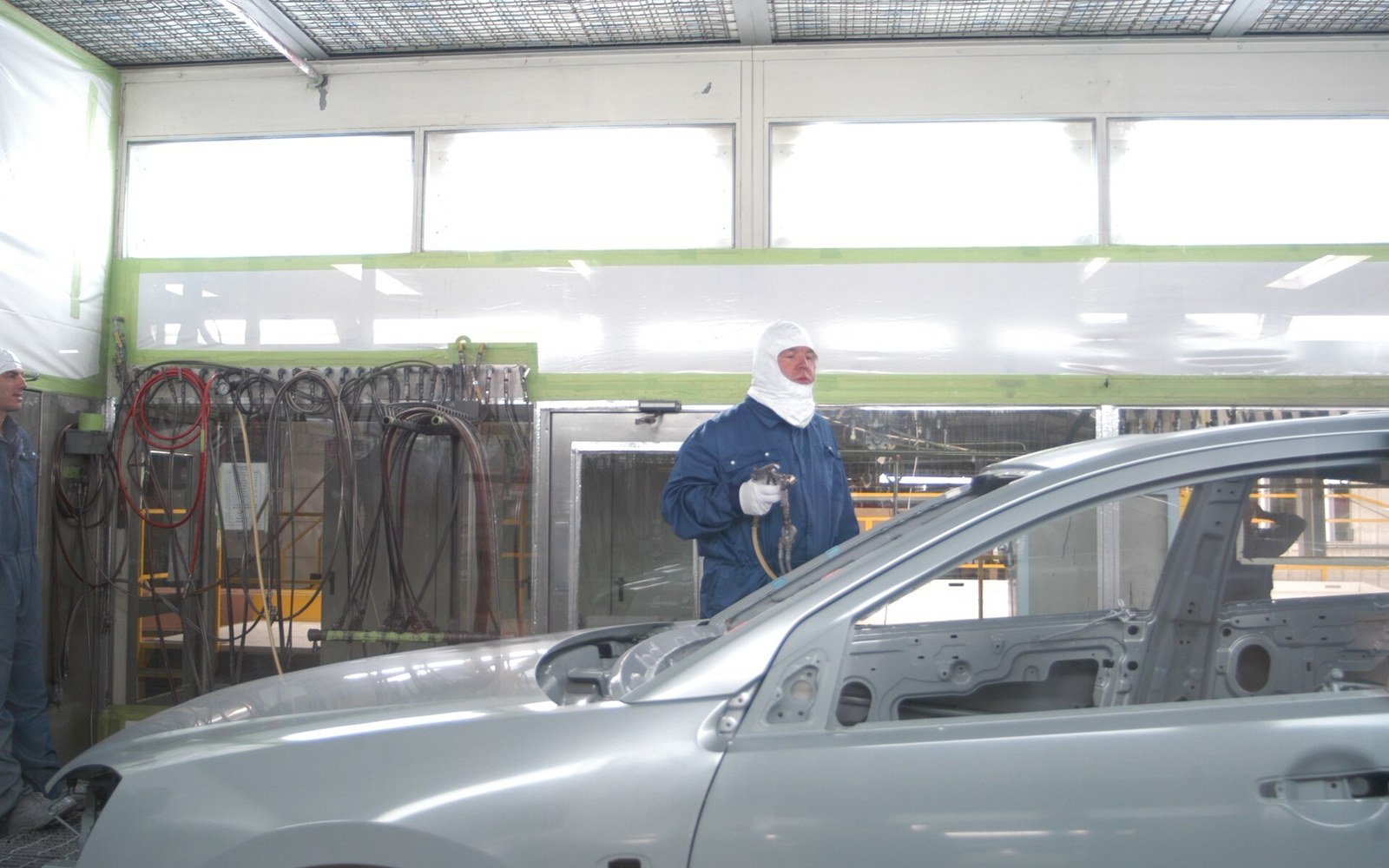
Preparation is the job. The gun is the last afternoon of it.
Photo: Spray booth · Wikimedia Commons
The factory could have. It decided, on balance, that it shouldn't.
Read next in Why the factory did not