The durability difference
A manufacturer validates for a design life; a tuner validates for a demonstration.
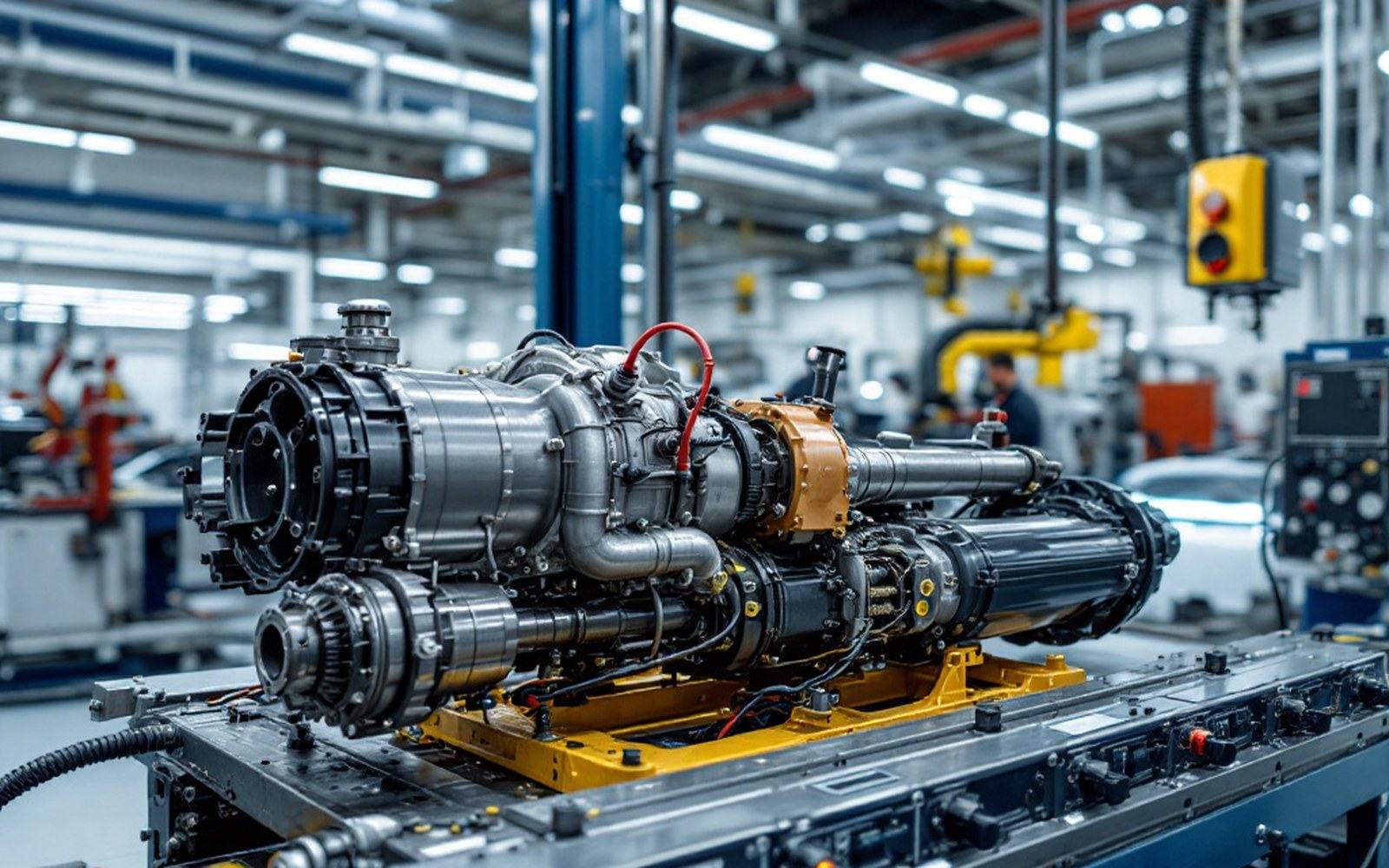
A rig runs a part for a design life. A demonstration runs it for an afternoon.
Two different clocks
When an OEM signs off a component, it has survived what the industry calls a design life — a defined number of cycles, thermal events, load reversals and calendar years that represent a reasonable ownership horizon. A camshaft bearing does not simply hold oil pressure on a dynamometer; it does so after a simulated decade of cold starts, contaminated fuel and neglected service intervals. That validation process runs over years and across millions of kilometres of real-world and accelerated testing before a single production car reaches a customer.
A tuning house works on a different clock entirely. Development is compressed, budgets are finite, and the benchmark is performance at a point in time rather than performance sustained across time. A modified calibration might be proven over thousands of kilometres of aggressive testing — and that is genuine engineering, not improvisation — but thousands is not hundreds of thousands, and a season of track days is not a decade of daily commuting. The gap is not incompetence; it is a structural difference in what the two exercises are trying to prove.
What gets stressed first
The components that reveal this soonest are the ones that sit close to the edge of the original design envelope. Increase boost pressure and the intercooler, charge-air pipework and head gasket all see higher peak loads at every single combustion event — tens of thousands of cycles per hour, every hour. Remap the fuel and ignition strategy and knock margin, the buffer between normal combustion and detonation, narrows: the engine now depends on fuel quality it may not always receive. These stresses accumulate invisibly until they don't.
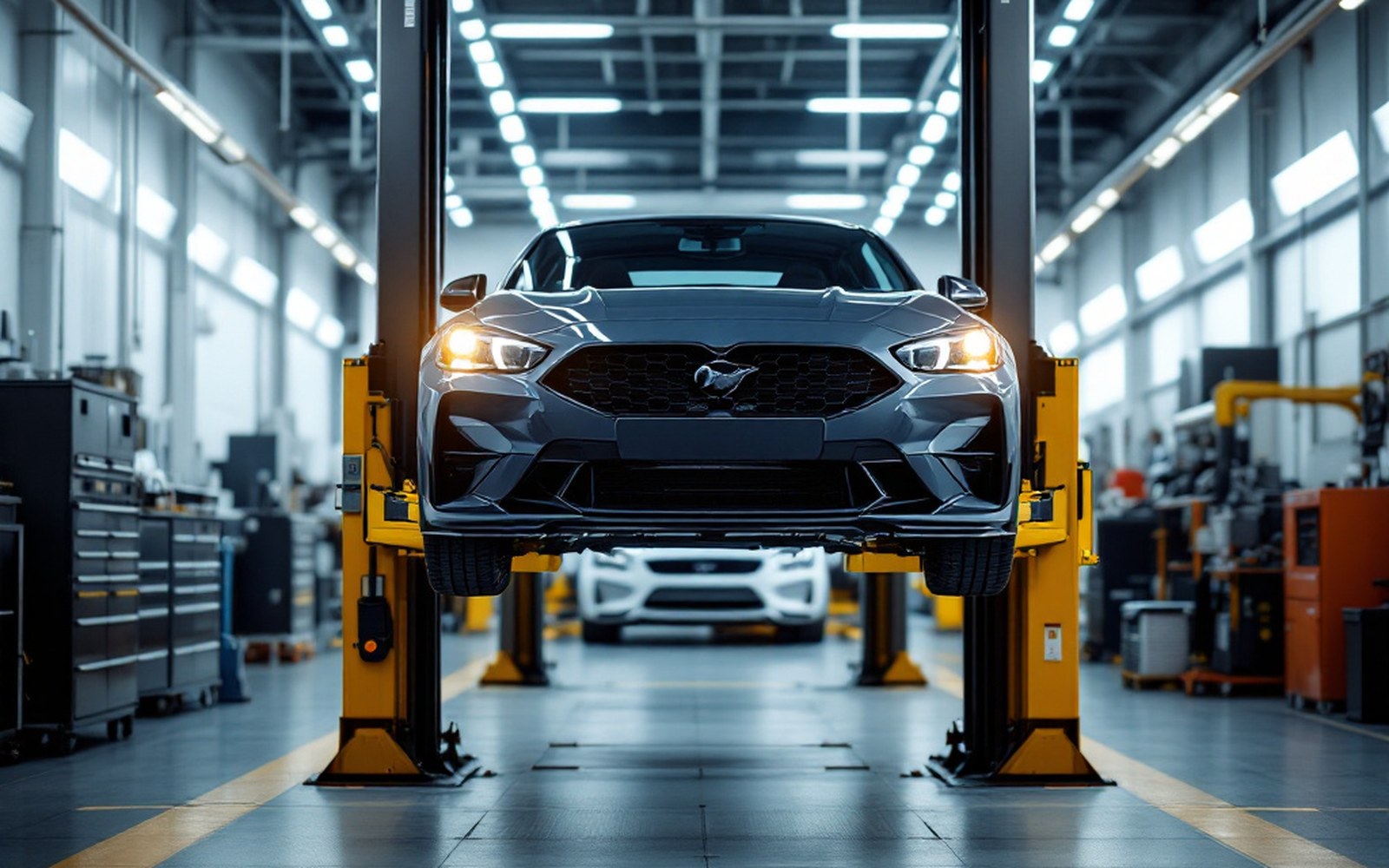
The underside is where the certification questions actually live. Most owners never see it.
Suspension geometry follows the same logic. A modified roll centre changes the side-load path through every bush, ball joint and subframe mount. Each of those components was designed to carry loads in a specific direction; redirect the vector and you are wearing the part in a way its design life ↗ never accounted for. The driver who attends one track day a year may never notice; the one who covers forty thousand kilometres a year on poorly-surfaced roads very likely will.
The validation gap
- Design life — the defined number of cycles, loads and years an OEM tests to; not a safety margin, a specification
- Knock margin — the buffer between normal combustion and detonation; narrows when calibration is aggressive or fuel quality drops
- Roll centre — the geometric point through which cornering loads transfer; moving it redirects stress vectors through every bush and mount
- Type approval — whole-vehicle regulatory certification; the standard that separates a manufacturer from a modifier
Brakes are the clearest case. Compound, disc and caliper are an engineered system, and changing one element changes the thermal balance the others were designed around. A pad that bites harder on a cool disc can also transfer more heat to the caliper and the fluid. A disc with more swept area runs cooler at sustained speed but may crack sooner under severe thermal cycling if the metallurgy was not chosen with that profile in mind. Cast iron disc fatigue ↗ is well understood; what varies is the specific cycle that triggers it.
Where the houses draw the line
The organisations that have invested in type approval — Alpina, Brabus, AC Schnitzer and Nismo all hold or have held approval in their respective markets — carry a different burden. Approval demands whole-vehicle validation, not component-level demonstration, and it does not expire at the end of a press launch. A car carrying an Alpina VIN is a vehicle whose manufacturer stands behind the complete modified package under European type-approval law, which means the durability argument is not hypothetical.
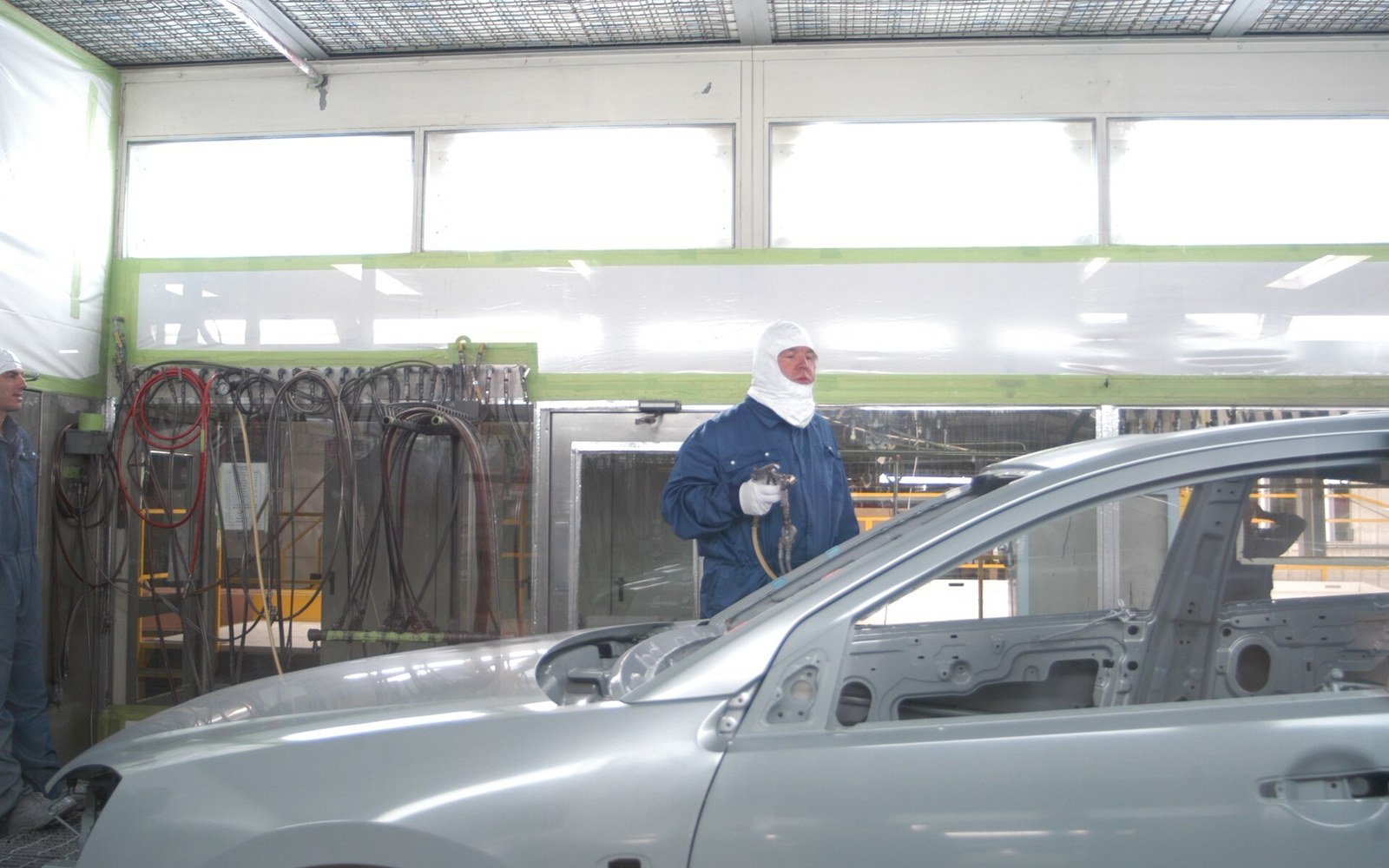
Preparation is the job. The gun is the last afternoon of it.
Photo: Spray booth · Wikimedia Commons
The majority of the aftermarket does not operate at that level, and it would be unrealistic to expect it to. What it means in practice is that the buyer of a modified car is inherently buying against a shorter validation horizon, even when the individual parts are excellent. The correct question to ask — of any modification, from any supplier — is not whether it performed on the day it was fitted, but whether it was designed to perform on the ten-thousandth day after that.
Read next in Why the factory did not